













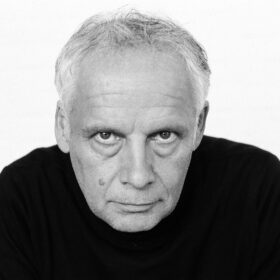

Robert Levin is represented by Rayfield Allied worldwide (exc. North America & Italy).

Artist Manager:
.(JavaScript must be enabled to view this email address)

Artist Manager:
.(JavaScript must be enabled to view this email address)

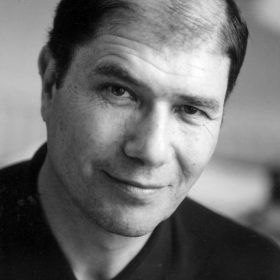
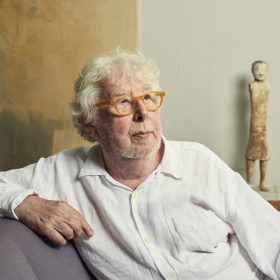
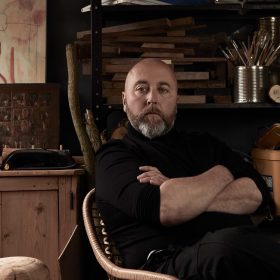
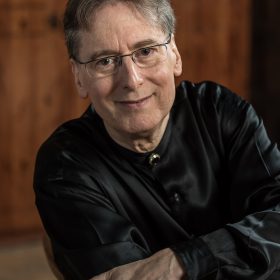
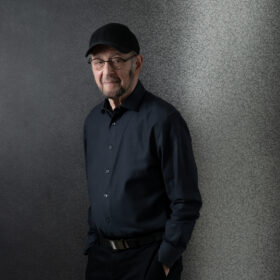
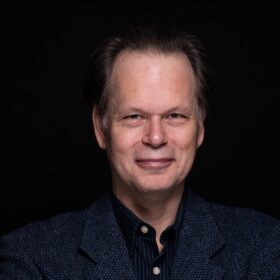
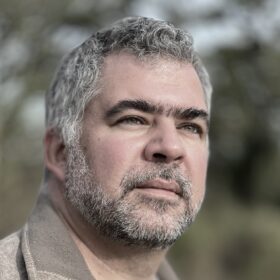
Robert Levin

Conductor

  • The Second Piano Concerto was also given a magnificent performance. Levin’s playing was a model of classicism for this early Beethoven work
    Jonathan Richmond, Boston Globe
  • Levin lives Mozart throughout his entire body, and for every second of the score...he plays the music as if he's writing it himself - for the first time
    Hilary Finch, The Times
  • Pianist and Conductor Robert Levin has been heard throughout the United States, Europe, Australia and Asia. His solo engagements include the orchestras of Atlanta, Berlin, Birmingham, Boston, Chicago, Cleveland, Detroit, Los Angeles, Montreal, Utah and Vienna on the Steinway with such conductors as Semyon Bychkov, James Conlon, Bernard Haitink, Sir Neville Marriner, Seiji Ozawa and Sir Simon Rattle. On period pianos he has appeared with the Academy of Ancient Music, English Baroque Soloists, Handel & Haydn Society, Orchestra of the Age of Enlightenment and the Orchestre Révolutionnaire et Romantique, with Sir John Eliot Gardiner, Christopher Hogwood, Sir Charles Mackerras, Nicholas McGegan, and Sir Roger Norrington.

    Renowned for his improvised embellishments and cadenzas in Classical period repertoire, Robert Levin has made recordings for DG Archiv, CRI, Decca, Deutsche Grammophon, Deutsche Harmonia Mundi, ECM, New York Philomusica, Nonesuch, Philips and SONY Classical. These include a Mozart concerto cycle for Decca; a Beethoven concerto cycle for DG Archiv (including the world premiere recording of Beethoven’s arrangement of the Fourth Concerto for piano and string quintet); and the complete Bach harpsichord concertos with Helmuth Rilling, as well as the six English Suites (on piano) and both books of the Well-Tempered Clavier (on five keyboard instruments) as part of Hänssler’s 172-CD Edition Bachakademie. The first recording in a Mozart piano sonata cycle has also been released by Deutsche Harmonia Mundi.

    A passionate advocate of new music, Robert Levin has commissioned and premiered a large number of works.  He is a renowned chamber musician and a noted theorist and musicologist. His completions of Mozart fragments are published by Bärenreiter, Breitkopf & Härtel, Carus, Peters, and Wiener Urtext Edition, and recorded and performed throughout the world.

    • Mozart’s Piano Concerto No 20 in D minor, Orchestra of the Age of Enlightenment
      Queen Elizabeth Hall

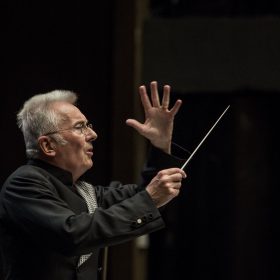
      Levin lives Mozart throughout his entire body, and for every second of the score. His eyes cue in every orchestral soloist - even if this means that they have to be at the back of his head. The chest lunges forward with every dynamic phrase or accent. And he plays the music as if he's writing it himself - for the first time. Every transformation and reinvention - not least his volleys of improvised ornament and embellishment - has the orchestra as much on the edge of their seats as the audience.
      Hilary Finch, The Times
      …Robert Levin, the pianist whose deft touch and improvisatory elan decorated a delightful and touching account of Mozart’s Piano Concerto No.23…these were among the magic moments. The Mozart had its share, too, with woodwinds gamboling so gracefully, with such limpid beauty, that the small clatter of Levin’s fortepiano became thrown into stark relief. Still, it was a sweet clatter, and always nimble, especially in his improvised cadenza and the finale’s mad swirl. Pleasure enough came from simply watching Levin action, directing the players mostly with his head, mimicking instruments with facial gestures: a pantomime dropped, happily, for the exquisitely forlorn slow movement.
      Geoff Brown, The Times
      he and the OAE then proceeded to deliver just about the most dramatic and exciting account of Mozart's Piano Concerto No 20 in D minor, K466, that the Queen Elizabeth Hall can ever have heard. How fierce, cutting, indeed revolutionary, sounded the tutti outbursts of the opening movement; how turbulent the central episode of the slow movement, how implacably driven the finale, till at the last moment it turns to comedy – and the boiling cadenzas Levin apparently improvised on the spot genuinely amplified the impact. […]Mozart's relatively playful and lyrical Piano Concerto No 21 in C major, K467, was necessarily more relaxed. Yet in the magically floating Andante, Levin offered an exemplary demonstration of 18th-century rubato: melody freely inflected every which way over absolutely steady accompaniment. And in his finale cadenza he naughtily teased the orchestra as to when he was going to let it come in again. This intensity, this delight, we were persuaded, is the way that classical music can ever be made anew.
      Bayan Northcott, Independent
  • Robert Levin’s Repertoire

  • Photos

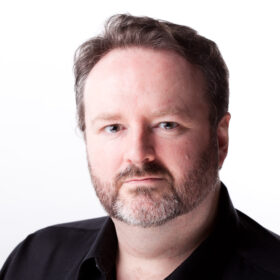
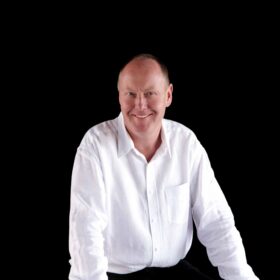
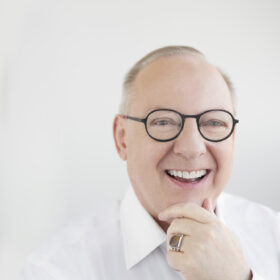
    • Photographer Credit Ascherman
      Photographer Credit Ascherman