
Helen Charlston’s ability to make each performance completely her own, and her depth of connection with audiences has earned her international acclaim as “one of the most exciting voices in the new generation of British singers” (Alexandra Coghlan, Gramophone). She was recently a BBC Radio 3 New Generation Artist (2021-23), and was the 2023 Gramophone Award winner for Best Concept Album. She also collected the Vocal award at the BBC Music Magazine Awards for her second Delphian album: Battle Cry: the only recording that year to win at both ceremonies.
This season, Helen sings Daniel in Handel’s Belshazzar with the RIAS Kammerchor, Mendelssohn’s Elijah with the Orchestre Philharmonique de Radio France and Maxim Emelyanychev, Bach’s Christmas Oratorio and St John Passion with the Orchestra of the Age of Enlightenment, and Elgar’s Dream of Gerontius with the BBC Philharmonic Orchestra. Helen also returns to the role of Marianne in Michel van der Aa’s Theory of Flames, a role she debuted in the world premiere of the work at Dutch National Opera last season, and which she will perform this year at the Bregenzer Festspiele. In recital she collaborates with the Consone Quartet at the Three Choirs Festival and Cowbridge Festival, with Sholto Kynoch at Wigmore Hall and Oxford Song among other venues, and with Fretwork at Skipton Festival.
Recent opera appearances have included her debut at Dutch National Opera in the world premiere of Michel van der Aa’s Theory of Flames in the role of Marianne, the title role in Handel’s Solomon with the Orchestra of the Age of Enlightenment, Sesto in Calixto Bieito’s production of Giulio Cesare at the Gran Teatre del Liceu conducted by William Christie, her debut at Versailles Royal Opera singing Dido in Purcell Dido & Aeneas, and at Grange Festival singing Sorceress/Spirit in the same opera. She also covered the title role in Charpentier Médée at Opéra national de Paris.
Further appearances on the concert platform include a programme of music inspired by Greek mythology with Britten Sinfonia and classicist, Natalie Haynes; Bach’s B minor Mass with Arcangelo; Handel’s Messiah with Royal Northern Sinfonia, Polyphony, and Royal National Scottish Orchestra; Bach’s St John Passion with the Czech Philharmonic; Mahler’s Third Symphony with Tampere Philharmonic Orchestra; and a residency at UKARIA as part of the Australian Chamber Music Festival, with repertoire including Schubert and Mahler songs, as well as collaborations with Quatuor Agate and musicians of Adelaide Symphony Orchestra.
A ‘Rising Star’ of the Orchestra of the Age of Enlightenment 2017-2019, Helen was selected for Le Jardin des Voix academy with Les Arts Florissants in 2021. She was a finalist of the 2021 Kathleen Ferrier Awards for which she was a recipient of the Ferrier Loveday Song Prize and won First Prize in the 2018 London Handel Competition.
Helen’s most recent album A Poet’s Love features “one of the most notable Dichterliebe recordings of recent years” (Gramophone Magazine). Released in 2026 by BIS Records with Sholto Kynoch, the album won the German Critics’ Lieder and Vocal Recital Award for Q3 2026 and received five-star reviews in The Times and BBC Music Magazine. She has further recorded with Signum and Hyperion, and on the Academy of Ancient Music’s own label in Dussek Messe Solemnelle which won a Gramophone Award in 2021, and Eccles’ Semele in the role of Juno, also shortlisted for a Gramophone Award.
Helen’s regular collaborators include Toby Carr, Sholto Kynoch, Consone Quartet, Joseph Middleton, Kunal Lahiry and Roman Rabinovich. She has recently performed in recital at Brucknerhaus Linz, the Oxford International Song Festival, with the Prague Philharmonia at Lobkowicz Palace, Concertgebouw Amsterdam and Wigmore Hall.
This biography is for information only and should not be reproduced.
UKARIA Chamberfest
UKARIA, October 2026
'She sings with great delicacy and insight and has power in reserve [...] making for a beautifully balanced and emotion-laden performance'
'Helen Charlston’s performance of four of the five Rückert Lieder, Mahler’s settings of Romantic poems by the early 19th-century poet Friedrich Rückert, again demonstrated her magnificent voice and her ability to convey emotional depth. Her Ich bin der Welt abhanden gekommen (I am lost to the world) was breathtaking.'
Chris Reid, Limelight Magazine
Mendelssohn's Elijah
Orchestre Philharmonique de Radio Paris, September 2026
'During the aria "Sei stille dem Herrn", the mezzo-soprano Helen Charlston shows herself as a beautiful alto with a rich and fleshy timbre.'
ConcertoNet.com
Britten Sinfonia: Phaedra
Aldeburgh Festival, Snape Maltings, June 2026
Standing alone commanding centre stage, Ms Charlston held the curtain for several valuable seconds with the audience totally mesmerised deep in thought. A special moment!
Planet Hugill
Bach B Minor Mass: The Bach Choir and Florilegium
The Royal Festival Hall, May 2026
'But the highlight of the vocal solo performances was Helen Charlston singing Agnus Dei from the heart with a commanding stage presence, a velvet-hued tone, and at one point a gorgeous sotto voce on the words ‘Agnus Dei.’'
Nick Holmes
Mahler Rückert-Lieder, Luxembourg Philharmonic
(May 2026)
Replacing Alice Coote at short notice, mezzo-soprano Helen Charlston, winner of William Christie's Jardin des Voix, impresses with the ductility of an impeccably conducted singing, the delicately coppery colours of a perfectly mastered instrument and the almost immaterial quality of a diction that does not waste a word of the poems. A name to follow for years to come.
Europe Says
CD: ‘A Poet’s Love’ with Sholto Kynoch, BIS Records
(May 2026)
A singer so compelling she turns me to jelly…What’s the first delight in Helen Charlston’s new album? Undoubtedly the British mezzo-soprano’s compelling voice, which moves about with such ease, floats the lines so feelingly and shares the words with a sensitivity that can turn your insides to jelly. That happened to me with the way she sang the word träumend (dreaming) in the very first song… Most performances [of Dichterliebe] over the years have cast the voice accordingly [as male] but Charlston, shows that with singing of this emotional depth, all that matters isn’t gender: its’s the broken heart. This is a marvelous recital.
Geoff Brown, The Times*****
Helen Charlston and Sholto Kynoch have created one of the most notable Dichterliebe recordings of recent years: few lieder-appropriate voices have Charlston’s resources of vocal colour and deep relationship to the words plus a pianist with his own strong ideas that mesh perfectly with hers… Much in the spirit (but not in the manner) of Lotte Lehmann’s 1941 recording (Naxos Historical), Charlston claims ownership of the cycle in ways suggesting that she wrote the piece herself. Her text0beased interpretative judgements veer toward near-spoken conversational directness but also employ tone-base lyricism reminiscent of Felicity Palmer at her peak. If anything, Charlston is even more engaged with the German language than her native English, as heard in her rightly acclaimed Purcell recordings… The greatness of Dichterliebe has never been in doubt, but in this recording the piece grows more in stature.
David Patrick Stearns, Gramophone
You can always rely on Helen Charlston for a thoughtful recital…The result is playful, poetic and exquisitely performed…Rolling the text around her mouth with infinite languor [in Loewe’s Die Lotosblume], Charlston brings an almost cabaret freedom to this daring, sensual song. This freedom, coupled with the stern beauty of her darkly pure mezzo, creates a friction that animates the whole programme… Charlston lets text lead the way [in Werner’s Knight’s Dream], precise in her shadings, rhetorical in her delivery, bouncing off Kynoch’s crisply articulated piano… Charlston joins a still surprisingly select group of women who have recorded the [Dichterliebe] cycle… there’s more weight here than a soprano can marshal, and Charlston deploys it selectively; Im Rhein startles with charry intensity, and the floodgates are fully opened in Ich grolle nicht.
Alexandra Coghlan, Limelight****1/2
…what expressive range Charlston and Kynoch bring to Dichterliebe! The enfolding tenderness of ‘Ich will meine Seele tauchen’ is subverted by an anguished ‘Ich grolle nicht’ in which the voice palpably breaks with emotion, and Charlston positively snarls the concluding ‘broke my heart in two’ at the end of the following song… Sung with a swooning sultriness, Carl Loewe’s ‘Die Lotosblume’ more than holds its own alongside Schumann’s better-known setting of the same sensuously perfumed text.
Paul Riley, BBC Music Magazine*****
Helen Charlston is a strikingly original talent on stage, so it should come as no surprise that her latest recital on disc pushes into unexpected territory… Charlston relishes Werner’s haunting, folk-inflected vocal lines, her wine-dark mezzo-soprano savouring every drop… Im wunderschönen Monat Mai gets things off to a trancelike start, voice and piano stretching certain phrases to the limit. It’s a mood they return to frequently, surprising the listener with the final elongated measure of Die Rose, die Lilie and delivering an uncommonly elastic Ich grolle nicht. Charlston’s honeyed middle register draws the ear throughout…
Clive Paget, The Guardian****
Dichterliebe is the destination, a culminating performance as sensitive to its fragile edges as its more optimistic musings. Charlston maintains liquid sustenance throughout, Kynoch ever-attentive to her beguiling nuances.
Ken Walton, The Scotsman****
This Dichterliebe is brilliantly characterised, Charlston and Kynoch moving seamlessly from the skittish joy of “Die Rose, die Lillie, die Taube, die Sonne” to an emotionally charged “Wenn ich in deine Augen seh”. The pair nail the desolation of songs like “Hör' ich das Liedchen Klingen” and the closer, “Die alten, bösen Lieder” rightly leaves the loose ends untied, Kynoch’s solo postlude as magical as it’s unsettling. Charlston’s warm, expressive voice is perfect for this repertoire, reminding us that Schumann dedicated the cycle to German soprano Wilhelmine Schröder-Devrient and not to a tenor or baritone.
Graham Rickson, The Arts Desk
It is fascinating to be able to compare these very different visions of the same poem [Die Lotosblume] by two different composers being given such sensitive treatment here by Charlston (with, for example, very delicate control of the vibrato on the final note), and Kynoch… Charlston can put gravitas into her voice for Im Rhein, im heiligen Strome, and also capture the awe with which the lover notes the similarity between the picture of the virgin in the cathedral and his beloved. In Und wüßten’s die Blumen, die kleinen, the flexibility of her voice marries well with the flowing accompaniment, and Das ist ein Flöten und Geigen, where the ironically cheerful accompaniment is at cross purposes with emotions of the voice, is also excellently performed by both partners… Helen Charlston makes intelligent use of the text and interprets the songs expressively.
David James, MusicWeb International
CD: Handel Messiah, Irish Baroque Orchestra
Linn Records (April 2026)
…on the recording, gratifyingly, we get to hear a substantial share for Helen Charlston, her voice firm, slightly metallic and unflaggingly expressive.
Erica Jeal, The Guardian****
…mezzo Helen Charlston’s – ‘He was despised’ – is luminous and compassionate
Nicholas Anderson, BBC Music Magazine*****
Michel van der Aa Theory of Flames (Marianne)
Dutch National Opera (March 2026)
Helen Charlston sings phenomenally as Marianne.
Peter van der Lint, Trouw (Dutch daily newspaper)
Charlston a luminous addition to the fold [of van de Aa’s music]
Hugh Canning, Opera magazine
…Charlston’s resonant and velvety mezzo combining with her engaging stage presence.
Hattie Butterworth, Opera Now
For literary lovers, the quality of the English libretto will not go unnoticed, delivered impeccably by native English speakers. Helen Charlston’s Marianne languished over her kicking ‘k’ in “tiny flickering dots” while an explosive “we wait” sent shivers down the spine.
Clare Varney, Bachtrack****
…Helen Charlston (Marianne / Dr. Hari)… are excellent in their respective roles: beautiful voices placed at the service of sensitive performers who are perfectly at ease in vocal writings that we can believe have been written and modeled on their vocal characteristics
Edoardo Saccenti, OperaClick
The cast…Helen Charlston as Marianne…is uniformly excellent
Shirley Apthorp, Financial Times
…a clear and realistic Neola both on and off the score, complemented timbrally by a reliable Helen Charlston (Marianne).
Carlos García Reche, Platea Magazine
Mezzo-soprano Helen Charlston used the opportunities in her role as the actress Marianne to show off her wonderful vocal qualities and fabulous technique. The clarity, precision and depth of expression with which she was able to infuse the vocal line were impressive… Her vocal beauty and ability to portray depth and nuance…
Alan Neilson, OperaWire
CD: Song cycles by Edward Picton-Turbervill
Delphian DCD34345 (January 2026)
Her warm mezzo-soprano and Picton-Turbervill’s sensitive piano writing create an intimacy that draws the listener in from the first bar.
The Stuart Review
Helen Charlston relishes the earthy comedy of Selima Hill’s poems I Want to be a Cow
Christopher Cook, BBC Music Magazine****
Handel Solomon (title role), Orchestra of the Age of Enlightenment
Queen Elizabeth Hall (October 2025)
Helen Charlston embodied him with nobility and a smiling grace, exuding a quiet sense of satisfaction at his achievements. A big virtue of her performance was the way she made every word count, particularly in the recitatives which became something more than mere connective tissue. Her opening accompagnato, 'Almighty Power' displayed her virtues, the firm line, strong shape to the music and admirable words all supported by fabulous orchestral textures, then in 'What though I trace' she added some stylish ornaments into the mix. In Act Two, her aria 'When the sun o’er yonder hills' was full of the character's inner confidence, then her final aria in Act Three 'How green our fertile pastures look' had an engaging catchiness too it along with some fine virtuosity.
Robert Hugill, Planet Hugill
Charlston has a gift for instant characterisation, and the phrasing/ornamentation was impeccable as ever
David Nice, The Arts Desk****
The young mezzo-soprano Helen Charlston took on the role of the Queen and the allegorical figures with remarkable expressive range. Her warmly timbred mezzo lent depth to the recitatives, while in the arias she shone with agility and nuanced tonal color. She skillfully balanced inner calm with powerful passion. Her conveyance of the allegorical content was particularly impressive: Charlston created characters who, despite their symbolism, seemed vivid and believable.
Léonard Wüst, Bochumer Zeitung
Helen Charlston Opera Repertoire
| Britten | Albert Herring (Florence Pike) |
|---|---|
| Bernstein | Trouble in Tahiti (Dinah) |
| Dove | Tobias and the Angel (Sara) |
| Eccles | Semele (Juno) |
| Handel | Semele (Ino) |
| Monteverdi | Ballo delle ingrate (Venere) |
| Purcell | Dido and Aeneas (First Witch) |
| Rhiannon Randle | Dido is Dead (Dido) premiere |
| Tchaikovsky | Eugene Onegin (Olga) |
| Tom Smail | Blue Electric (Anna) premiere |
Helen Charlston Baroque Recital Material
| Byrd | Songs with Viol Consort: |
|---|---|
| Handel | Solo Cantatas (continuo only): |
| Monteverdi | Lamento d’Arianna |
| Purcell | Bess of Bedlam |
| Strozzi | Il Romeo |
| Telemann | Ihr Völker Hort |
Helen Charlston Song/Lieder Repertoire
| Berg | Sieben frühe Lieder |
|---|---|
| Brahms | Various, including: |
| Britten | Charm of Lullabies |
| Elgar | Sea Pictures (with orchestra and piano) |
| Haydn | Arianna a Naxos |
| Schubert | Various, including |
| Schumann | Frauenliebe und -leben (Op. 42) |
| Clara Schumann | Die gute Nacht, die ich sage dir |
| Tchaikovsky | Again as before alond |
Helen Charlston Oratorio Repertoire
| J.S. Bach | B Minor Mass |
|---|---|
| Beethoven | Symphony No. 9 |
| Buxtehude | Membra jesu nostri |
| Durufle | Requiem |
| Dvorak | Stabat Mater |
| Handel | Dixit Dominus |
| Haydn | Harmoniemesse |
| Mendelssohn | Elijah |
| Mozart | Coronation Mass |
| Pergolesi | Stabat Mater |
| Rutter | Feel the Spirit |
| Scarlatti | Missa para o Santissimo Natal |
| Stravinsky | Cantata |
| Tippett | A Child of our Time |
| Vivaldi | Gloria |
These photos are available to be downloaded.
Right click on a desired image and select the "Save Link As" option.
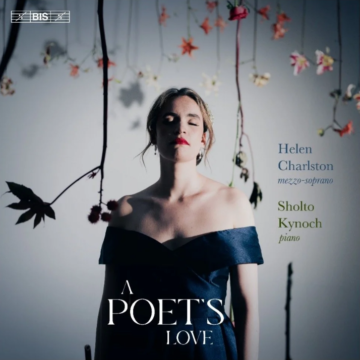


A Poet’s Love (with pianist Sholto Kynoch)
A magical programme - formerly titled 'Knight's Dream' - based around Dichterliebe and the extraordinary world of Heine's poetry in the Lyrisches Intermezzo from which Schumann chose his texts. All the texts from that set of poems have become the cycle we know and love. We hear songs by Fanny Hensel, Felix Mendelssohn, Carl Loewe & Josephine Lang as well as Knight's Dream by Heloise Werner which was a BBC Radio 3 commission written for Helen when she was a BBC New Generation Artist. She has recorded the programme and the album was released to high praise on BIS Records in May 2026. In 2023, she performed this programme 5 times and had such wonderful responses from all of the audiences, with rave reviews in the UK press including The Observer and Times.
[Also available as a 1 hour programme]
Download
Notes of Old (with pianist Sholto Kynoch)
So often we find ourselves struck by musical echoes between pieces that never knew each other, set apart by history, style or instrumentation. Nevertheless, we hear the connections, and find ourselves drawn in by musical earworms replayed across history. Tonight, let music by Bach, Monteverdi and Charpentier resonate in unexpected ways with songs by Schubert, Viardot and Anna Semple, as we celebrate music as a recurring motif in human experience.
Following a playlist-esque first half full of songs ruminating of love, our place in the world and music itself, the second half is dedicated to Schumann's extraordinary Kerner Lieder which are also obsessed with these ideas. Whether it is in joyful storms of lust, or the serenity of silent adoration, old melodies are still present heralding music as the ultimate partner in life.
[TOTAL 1 hour 16 mins]
Download
Love’s Labyrinth (with pianist Sholto Kynoch)
The ultimate evening of storytelling, tonight’s programme focuses on two towering figures in Greek Mythology. Ariadne and Phaedra were both married to Theseus: Ariadne was cruelly betrayed by him, while Phaedra attempted to seduce his son Hippolytus before being overwhelmed by guilt and taking her own life. Haydn portrayed Ariadne’s despair and fury in his 1790 dramatic cantata Arianna a Naxos, which quickly became a hit, not least during Haydn’s celebrity years in England. Nearly 200 years later, in 1975, Britten wrote his final vocal work, the cantata Phaedra, for Janet Baker. It is a thrilling and rigorously concise telling of the story of Phaedra, which deliberately nods to its Classical and Baroque forerunners. Around these monologues, Helen and Sholto follow the threads of timeless myths, in music by Schubert, Barbara Strozzi, Reynaldo Hahn and Héloïse Werner, as well as the world premiere of a specially commissioned work by Richard Barnard.
Download
DOWLAND+ (with lutenist Toby Carr)
A celebration of the heartfelt world of Elizabethan Lute Song
‘and though the title dost promise teares, unfit guests in these joyful times, yet no doubt pleasant are the teares which Musicke weepes, neither are teares shed alwayes in sorrow, but sometime in joy and gladnesse.’
Dowland’s dedication to Lachrymae or Seaven Teares (1604)
Download
If the Fates Allow (with Sounds Baroque: Harpsichord, Theorbo & Bass Viol)
Are we steered through life by our hearts or the relentless hand of fate? Follow us through a Purcellian pursuit of love: from beguiling music to confusing pleasure, aching beauty to deep loss. We celebrate every love story that has flourished, almost flowered or failed inconsolably.
This programme was released as an album on BIS records in May 2025
Download
On the wings of a song (with the Consone Quartet)
Lieder reimagined in arrangement for mezzo soprano & string quartet Helen Charlston (Mezzo Soprano) & Consone Quartet.
Two former BBC New Generation Artists join forces for this programme, celebrating the intimacy of the world of lieder, but not quite as one might expect it. Originally written for voice and piano, these songs have been lovingly arranged by violinist Bill Thorp, for Helen and the Consone Quartet. Whilst there is no historical precedent for this sort of arrangement, one cannot help but imagine that expanding these songs to include string quartet might just have been the sort of fun that was had at domestic evenings of music making at which these songs would have first been heard. Imagine an evening spent at the Mendelssohn’s large family home, hosted by brother and sister: Felix and Fanny. As friends of the Mendelssohns, Clara and Robert Schumann could well have been in attendance too, and had their works performed.
Soon to be recorded on BIS records for release.
Download