Artistic Partner Orchestra of the 18th Century
Artistic Director Eroica Berlin
Artistic Advisor Teatro Nuovo (NY)
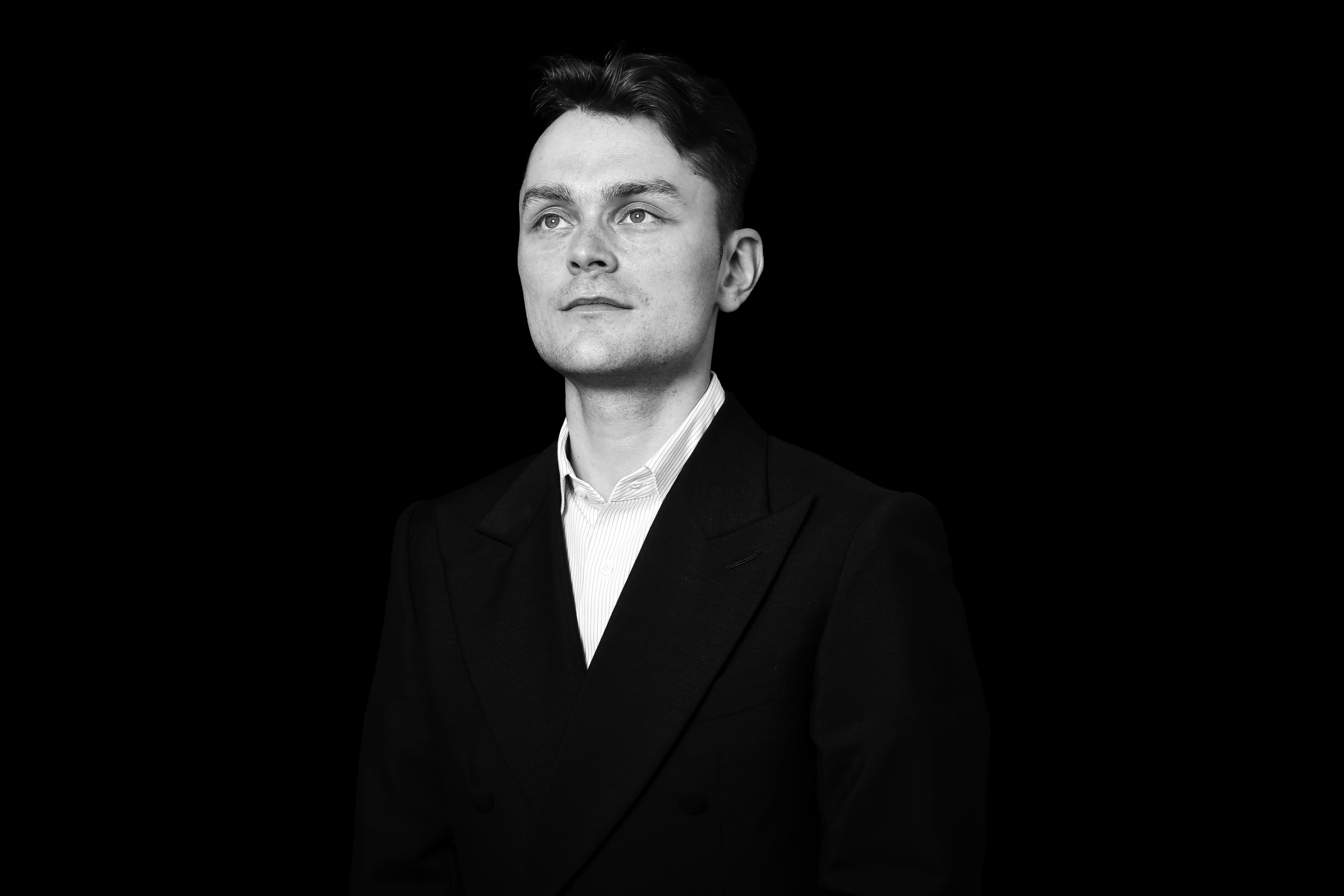
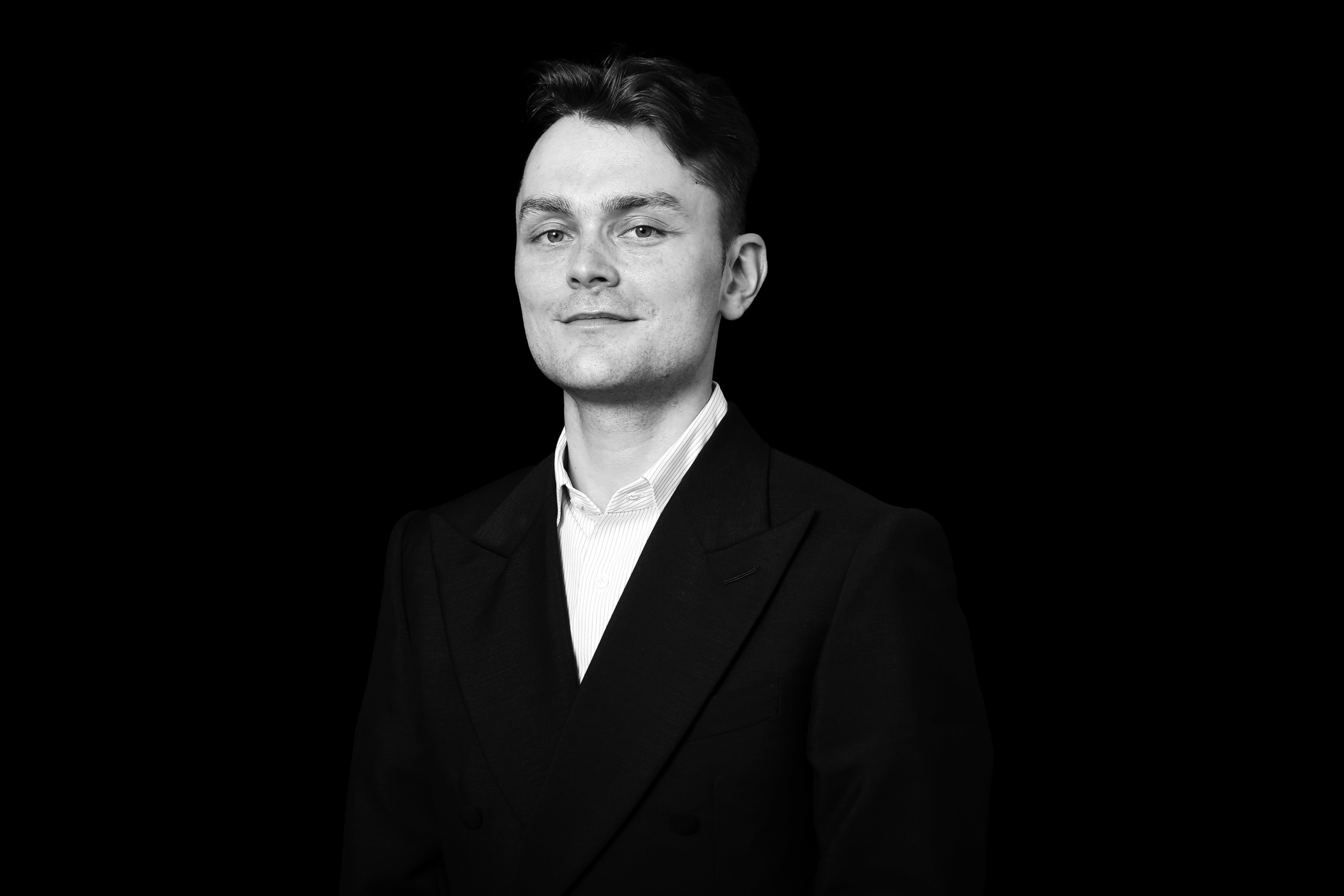
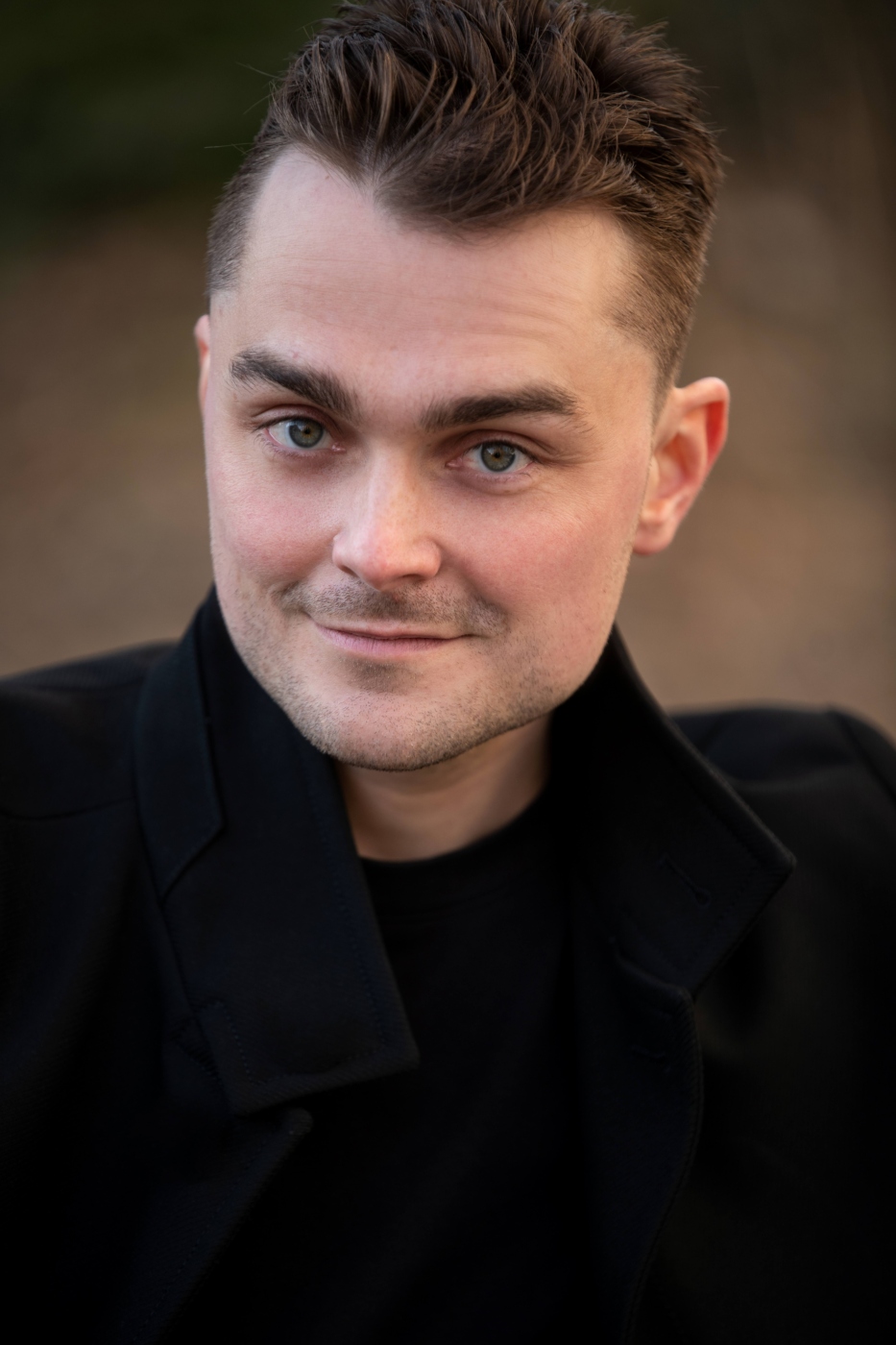
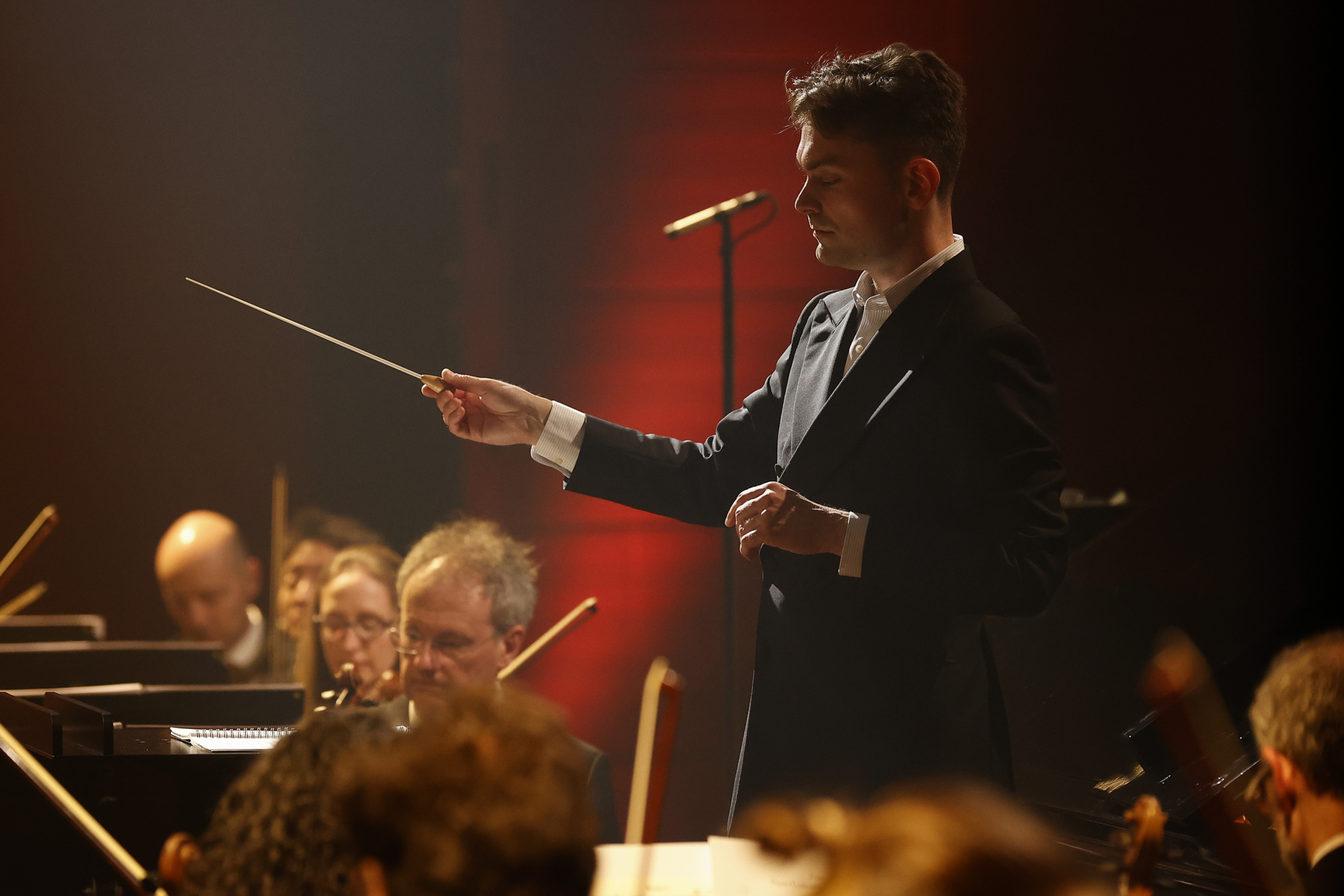
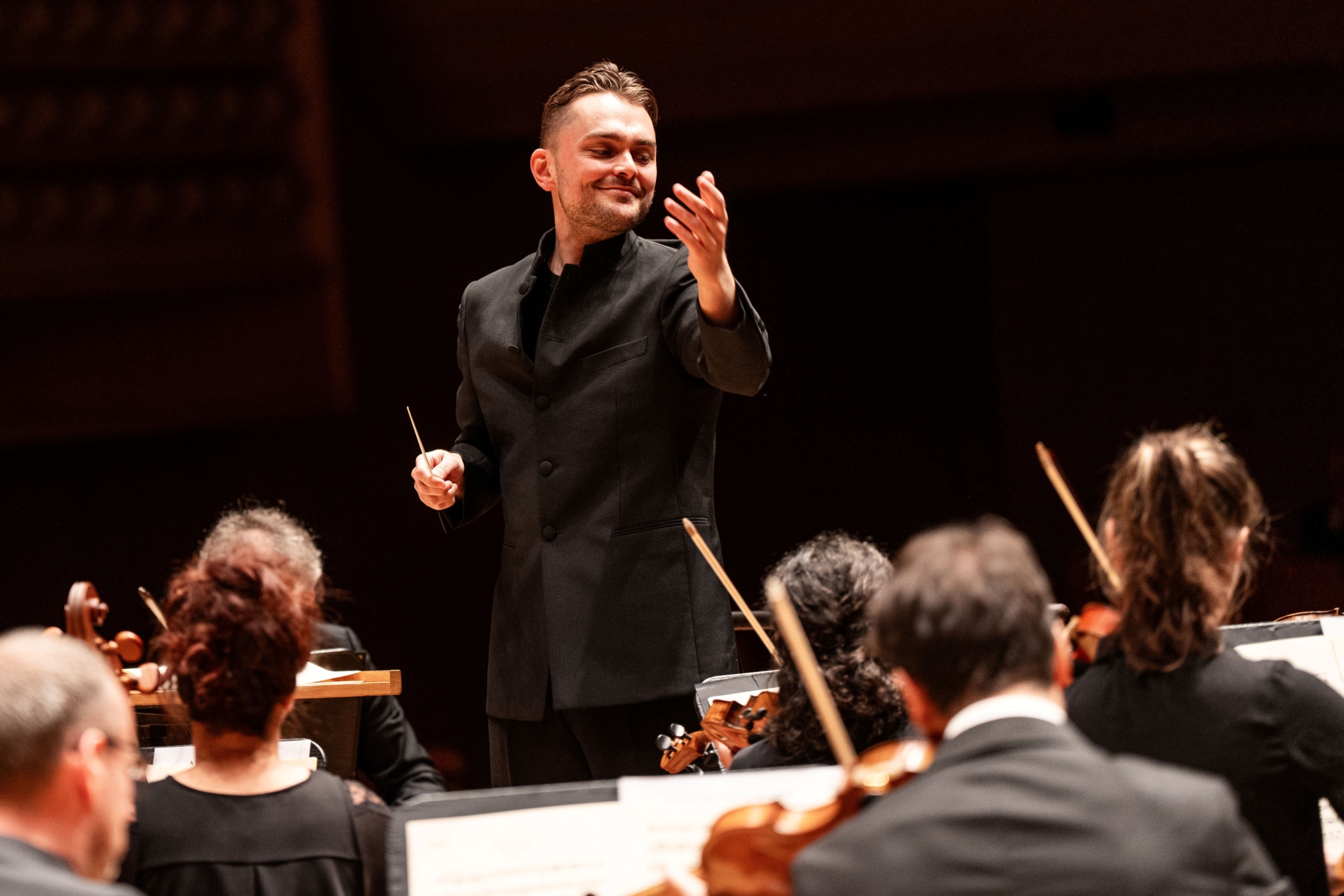
Jakob Lehmann is quickly establishing himself as a highly sought-after conductor, energetically merging historically informed performance styles and fundamental stylistic research with emotionally sincere and engaging performances on period as well as modern instruments, both in the symphonic and operatic world.
Following his debut at the 2026 BBC Proms conducting Berlioz’ La damnation de Faust with Les Siècles, highlights in his 2026-2027 season include debuts with SWR Symphonieorchester, WDR Sinfonieorchester, Münchner Rundfunkorchester, Orchestre Philharmonique de Strasbourg, Wuppertaler Sinfonieorchester, Musikkollegium Winterthur, and Tafelmusik Baroque Orchestra as well as opera productions at Volksoper Wien and Oper Wuppertal. Amongst his recurring collaborations are his long-term exploration of Rossini’s music on period instruments together with London’s Monteverdi Choir and Orchestras and concerts with Les Siècles, Orchestra of the 18th Century, and La Banda storica Bern, as well as teaching engagements at the Juilliard School New York and Mozarteum Salzburg.
Recent highlights have included collaborations with Scottish Chamber Orchestra, Bruckner Orchester Linz, Orchestre Philharmonique de Marseille, Wiener Symphoniker, Tonkünstler Orchester, Saarländisches Staatsorchester, Symfonieorkest Vlaanderen, Beethoven Orchester Bonn, as well as opera productions at Théâtre des Champs-Elysées, Opéra de Rennes, Angers-Nantes Opéra, and North Carolina Opera.
Being held in high regard amongst period instrument orchestras for his expertise in the historically informed performance styles of Classical and Romantic repertoire, he regularly works with high-profile groups such as Les Siècles, Monteverdi Choir and Orchestras, and Anima Eterna Brugge and recently has been named Artistic Partner of the Orchestra of the 18th Century.
As a specialist for the music of Rossini, Donizetti, Bellini, and the entire Belcanto period, he has contributed greatly to the exploration and research into the historically informed performance practice of this style. From 2019 till 2025 he served as Associate Artistic Director of New York based opera company Teatro Nuovo, and is presently serving as the company’s Artistic Advisor.
Jakob’s discography encompasses a wide range of repertoire on various labels, including his 2024 recording of Rossini’s L’italiana in Algeri with Eroica Berlin on Pan Classics, which was praised for its “astonishing approach“, and “relentless enthusiasm“. Forthcoming titles include Rossini’s Stabat Mater
and Petite Messe Solennelle (with Monteverdi Choir & Orchestras), and operatic excerpts by Wagner (with Les Siècles and Beth Taylor), all on harmonia mundi.
This biography is for information only and should not be reproduced.
Beethoven Symphony No. 7 & Farrenc Symphony No. 3, Tafelmusik
Toronto, September 2026
Jakob Lehmann…a young conductor who seemed to light a fire under the orchestra, even as he led with discipline & firm control. Some of the loud dramatic exchanges in the first movement land with violence, but with a strong sense of intention & purpose. Our experience of Beethoven was beyond inspiring, not just because we couldn’t sit still, watching and listening. A familiar piece sounded brand new. In passages where there’s a dialogue between voices, Jakob played up the drama…clear gestures, remarkable energy in his body, and clarity above all. It was a bit like watching Jakob give a TED talk to the orchestra, who seemed to be inspired to play better than I have ever heard them play. The audience seemed eager, ready to embrace what we heard, louder and more boisterous in response than any Tafelmusik audience I have ever seen…Jakob showed us something remarkable, both in the unknown works and the familiar one
Barczablog
This young German combines a sure grasp of the whole with exacting attention to detail. Plus a current of energy that made Beethoven’s familiar Seventh Symphony in the second half sound as fresh as the unknown Farrenc…He avails himself… of a wide range of expressive options, including a flexible approach to tempo. As for the orchestra of 36 — grounded by precisely two double basses — it produced a big, dynamic sound that suggested twice those numbers. If some tuttis had a touch of roughness, this added to the fundamentally Beethovenian character of the performance
Arthur Kaptainis, Classical FM Canada
Rossini’s ‘Petite messe solenelle’, Montiverdi Choir & Orchestre Révolutionnaire et Romantique
Alexandra Palace, September 2026
Lehmann drew an exciting performance, the clean attack of both the ORR and the 41-strong Monteverdi Choir quite thrilling. Raucous horns and belligerent timpani contributed to a tremendous climax to the Gloria, the choir in stirring voice
Mark Pullinger, Backtrack
You can get lost in the arguments about Rossini’s diverse versions of this score, but conductor Jakob Lehmann has not only employed the four-string double basses that, though novel at the time, Rossini specifically requested, he is also schooled the choir in massive portamenti. In the mass’s Sanctus, the choir sings the words “excelsis” and “benedictus” with the kinds of slow-descending slides that are rare in individual singers but far rarer in choral forces: a thrill. “Historically informed” sounds pedantic as a term; Lehmann makes history live and breathe.
Alasdair Macaulay, Slipped Disc
Berlioz ‘La Damnation de Faust’, Les Siècles
BBC Proms Royal Albert Hall (August 2026)
Lehmann, a conductor of punctilious attention to detail and structure, dared to drop passages of sustained pianissimo into those wide open spaces and the music resounded as clearly as any fanfare.
Mark Valencia, Bachtrack
Lehmann’s unabashed embrace of old-school concert conventions meant that La Damnation by and large returned to the status of a pageant of luminous vocal, choral and orchestral set-pieces
Boyd Tonkin, The Arts Desk
Lehmann seemed to relish the ability of the orchestra to be quiet, to produce a web of sound. The Dance of the Sylphs was one such moment, where the ravishing orchestral textures made you forget that the movement feels dramatically redundant! There were strong solos too, notably the viola in 'Autrefois, un roi de Thulé' and the cor anglais in 'D'amour l'ardente flamme'. In fact, there was so much orchestral detail that Lehmann and his players held you spellbound
Robert Hugill, Planet Hugill
The young conductor Jakob Lehmann is becoming one of the marvels of our age. He specialises in period-instrument accounts of early-nineteenth-century music – but what matters more is the sheer esprit he brings to these scores: he plunges, apparently effortlessly, into their nervous systems...Berlioz’s highly original orchestral sonorities and the whole mindset of his music drama sounded more original than ever before in my experience...I hope Lehmann gives us more Berlioz. The originality of this composer – which can elude many – can hit you on many levels: it is there in his instinct for the psychology of his characters, there in his instrumentation, there in the vision with which he depicts the larger world over his characters’ shoulders. So it was in this Prom performance
Alastair Macaulay, SlippedDisc
The performance [Jakob] helmed was intricate and mostly compelling... Brighter textures built by Lehmann pushed the inner orchestra voices forward.
Neil Fisher, The Times
As the evening progressed the young conductor Jakob Lehmann increasingly impressed with his gentle but comprehensive control, notable grasp of the score and his movement which had nothing superfluous or showy but was elegant in its natural simplicity
Jangeld and Tetchy
German conductor Jakob Lehmann impressed with his precise control of dynamics and vocalists and his view of the overall structure
John Rhodes, Seen and Heard International
Lehmann, who was making his Proms debut, tended to keep things moving, sashaying smoothly between the different sections and ensuring the singers breathing and phrasing were fully supported
Rob Pennock, ClassicalSource
Against the tenor voice was an orchestral tapestry surely never heard in this piece in this hall before, thanks to conductor Jakob Lehmann’s careful untangling of strands...Lehmann not only excelled on the minute-by-minute level, but also appreciated the narrative trajectory, with tempo changes impeccable... The various distanced effects worked brilliantly, too, and whether delivering flickering half-lights or Infernal revellings, the orchestra never missed a beat
Colin Clarke, Opera Today
Exceptional choral singing, a distinguished veteran cast, fascinating period colours and Lehman’s beautifully stylized conducting told this version of the story in which Faust finds no redemption
Iasonas Gallonbramma, Parikiaki
Wagner Parsifal & Tristan and Isolde, Liszt Piano Concertos No. 1 & 2
Les Siècles, La Chaise-Dieu (August 2026)
It is an orchestra at the top of its game that tackles, in the second half of the concert, the symphonic passages from Parsifal under the conductor’s free-flowing touch and passionate direction.
Michèle Tosi, ResMusica
Les Siècles have pulled off a rare feat: presenting Wagner in a different light. Far removed from the opulent orchestral sounds with which the composer is often associated, the ensemble brings to life the sounds of the mid-19th century using period instruments. Under the baton of the young German conductor Jakob Lehmann, this journey into the past reveals a rougher, more organic Wagner, where the freshness of the woodwinds, the warmth of the strings and the brilliance of the percussion combine to create a remarkably vivid sonic palette. The passages from Tristan und Isolde and Parsifal thus gain in depth and mystery, regaining an almost tactile depth, a world away from a modern perfection that is at times disembodied.
La Montagne (Thiers-Ambert)
Dvorak Cello Concerto in B minor & Beethoven Symphony No 6, Les Siècles
Festival de Radio-France, Montpellier (July 2026)
Under [Lehmann's] baton, the phrasing is very straightforward, without any romantic effusiveness, which...effectively allows the voices to come to the fore, revealing the full melodic and harmonic richness of Beethoven’s composition.
Pierre Giangiobbe, Classykeo
Weber & Tchaikovsky, Opera de Marseille
(June 2026)
Lehmann conducts with sweeping, clear gestures. He shapes a rich, contrasting sound that remains consistently cohesive. In both the symphony and the overture, he allows the brass to shine without ever sacrificing nuance.
In the [Tchaikovsky] Variations, he creates a more intimate atmosphere: we are suddenly transported from a large concert hall to a chamber music salon, with piani delicately scattered like confetti.
Julien Delholm, Classykêo
Wagner Parsifal & Tristan and Isolde, Liszt Piano Concertos No. 1 & 2, Les Siècles
Touring in France (April 2026)
One is immediately captivated by the fluidity and expressiveness of the performance, the precision of the interpretation and the sense of contrast that Lehmann brings to these two iconic pieces from Tristan und Isolde. The arrangement of the orchestra on stage – with the violins on either side, the violas and cellos in the centre and the double basses at the back – lends Wagner’s music a luminous richness of rare beauty...Les Siècles, under Lehmann’s baton, trace the dramatic arc that begins and ends with the ‘Tristan chord’, with a tension imbued with deadly passion, without the slightest compromise on either clarity or precision. Everything is remarkably balanced: the motif from the Act II duet; the reappearance of the motif of desire, where the orchestra swells in a vast crescendo to the highest notes, before playing the motif of the final consolation diminuendo; and the suspended conclusion marking Isolde’s last breath. Les Siècles, under Lehmann’s baton, bring out the unconventional colours of the ‘Prelude-Liebestod’ with great nuance. The period instruments, notably the cellos, horns, clarinets and bassoons that introduce the first theme, offer a warm, silky sound, admirably brought to the fore by Lehmann’s rigorous conducting, which does not hesitate to emphasise the tensions in this formidable staging of desire by Wagner...Les Siècles and Jakob Lehmann open the Parsifal sequence with the ‘Prelude’, creating an atmosphere of serene contemplation. The period instruments produce a deep, rich sound that Lehmann shapes with the tenderness of a devoted lover.
Hannah Starman, Cult.News
The young conductor shares Roth’s musical values to such an extent that the handover has been seamless, while he and Chamayou, the latter employing an Érard piano of 1910, had such a meeting of minds in Liszt that this listener craves further collaborations between them. The two concerts caught all the score’s romance and lush melodies without a trace of mawkishness… The evening’s concluding music, a substantial wordless sequence from Parsifal in which the famous ‘Dresden Amen’ recurred like a motto to fuse the excerpts into a convincing suite, was transcendent.
Musical America
At the helm of Les Siècles, conductor Jakob Lehmann, alongside pianist Bertrand Chamayou, brought their musical worlds to life in a programme of rare intensity, before an audience that was completely captivated. Wagner opened the concert with excerpts from Tristan und Isolde, including ‘Liebestod’ of almost solar beauty, before giving way, at the end of the programme, to Parsifal. The Prelude, the ‘Transformation Music’ and, above all, ‘The Good Friday Spell’ brought the evening to a dazzling close. The term is no exaggeration: the concert was spectacular, at times even overwhelming, but always imbued with a striking energy.
Jean-Rémi Barland, Destimed
Jakob Lehmann always conducts with enthusiasm, precision and a firm hand. And you can sense a joy in playing together that is a pleasure to witness.
Gilles Lesur, ConcertoNet.com
The orchestra Les Siècles is driven, and that really is the right word, by Jakob Lehmann, a young conductor to watch...Jakob Lehmann rises to the challenge of a formidable programme. The sound is rich and immersive, and the pianist is devilishly expressive.
Pétra Wouters, Wukali.com
Donizetti Lucia di Lammermoor, Opéra de Rennes/Angers-Nantes Opéra
(February, March 2026)
Jakob Lehmann is not the first conductor to seek to restore Lucia di Lammermoor to its authentic form. Several before him had attempted to return to the original…but the young Berlin conductor goes further and, drawing on the recent critical edition, offers an entirely new vision of Donizetti's opera. His precise and inspired conducting gives the orchestra a prominent role as the driving force behind the action and brings the orchestration to life in a masterful way, giving it exceptionally shimmering colours...The gamble has paid off for this production, which revisits Donizetti's opera in a manner that is unusual and original in every sense of the word.
Alfred Caron, Opéra Magazine
With Lucia di Lammermoor, Donizetti created in 1835 a kind of quintessence of Gothic Romanticism in opera...But his masterpiece has become established in versions revised for the comfort of the performers, which makes the Rennes Opera's initiative to perform Ricordi's critical edition, which returns to the original score, for the first time in France all the more exciting. One could get an idea of this from the recordings by Lopez-Cobos and Mackerras, but nothing beats seeing it live to appreciate its appeal...The ensemble sounds less rounded, more harsh, without languor. The orchestra is re-evaluated, thanks in part to the conducting of Jakob Lehmann, who is passionate about researching historical performance styles. The German conductor elicits dark and tragic colours from the Orchestre National de Bretagne, whose harp, horn and cellos seek drama rather than charm.
Christian Merlin, Le Figaro
Jakob Lehmann sets out to free the work from the weight of tradition and bring it closer to Donizetti's original vision, returning to the original keys and eliminating the embellishments added over the decades. The result is as surprising as it is convincing, and this lively and precise interpretation does full justice to the work.
Véronique Boudier, Ôlyrix
Jakob Lehmann's flexible and precise conducting provides a solid foundation for this production, which remains faithful to Donizetti's original spirit.
Vincent Deloge, Resmusica
Jakob Lehmann's direction plays the card of dark flamboyance, as if Donizetti's opera were turning into a psychological thriller...the conductor keeps a firm hand throughout, with a keen sense of atmosphere.
Didier Van Moere, Diapason
In the pit...the conductor Jakob Lehmann sculpts and sharpens all the expressive rough edges of the drama.... he elicits a rich palette of colours and timbres from the musicians of the Orchestre National de Bretagne. Little by little, as the orchestra accompanies the sacrificed victim in her ordeal, this orchestral lava, raspy and electric, accurately constructs a chilling vision that makes the work an irrepressible cynical machine.
Alexandre Pham, Classique News
At the podium, the young conductor Jakob Lehmann fully embraces a minimalist approach at the helm of the ONPL (Orchestre National des Pays de la Loire), bringing out the subtle orchestration of Donizetti with particular vigour and care.
François Hudry, Crescendo Magazine
Wagner Parsifal & Tristan and Isolde, Liszt Piano Concertos No. 1 & 2, Les Siècles
Touring in France (January 2026)
The young German conductor Jakob Lehmann sweeps his arm across the orchestra, literally embracing it, as he performs some of the sublime passages from Tristan und Isolde and Parsifal. This Wagner...has the charm of the old, the patina of rough old wood that we love to caress with our hands, that delicate, timeless fragrance far removed from modern blandness…[In Liszt,] the balance between Bertrand Chamayou and Les Siècles, masterfully conducted by Jakob Lehmann, is striking here. Piano and orchestra clash and merge in a single gesture, shifting from elegy to violent outburst, from peaceful reverie to epic march. A distillation of romanticism, reflecting a passionate and thrilling concert.
Jean-Marc Petit, ResMusica
Jakob Lehmann conducts with broad, expressive gestures. The conductor could be a romantic hero! He becomes one with the music, offering us almost a choreography.
Jean-Marie Chamouard, cult.news
Such roundness and fullness, even in the pianissimo, and such mystery at the end when the pizzicatos announce the wonderful chord that launches Isolde's Death! The strings have the finesse, transparency and lightness of an enlarged quartet, and the double basses give them a splendid organ-like colour. It is incredibly beautiful how conductor Jakob Lehmann allows it to blossom as much as he organises it naturally, right up to the final explosion...Les Siècles [in Liszt]? Well conducted by a conductor who is attentive to changes in tempo, which go off like clockwork, and who listens to his soloist.
Alain Lompech, Bachtrack
Jakob Lehmann's conducting is flexible, unpretentious and expressive. He certainly brings less sensuality, but more emotion than many of his colleagues...The strings are absolutely magnificent. The fact that Jakob Lehmann is a violinist by training certainly has something to do with this, and one imagines that he was able to give them valuable guidance. Numerous details, such as skilfully chosen fingerings and particularly careful phrasing, give this orchestra an ever-renewed appeal. Here is a young conductor who exudes genuine sensitivity, and we can only wish him a successful career. And Les Siècles certainly knows how to offer us rare and ever-renewed pleasures.
Pierre Carrive, Crescendo
Lehmann offers us a thoroughly romantic evening, imbued with the innovative romanticism that we hold dear. He opens with the Vorspiel and Liebestod from Tristan und Isolde, a Wagnerian piece whose colours he magnifies with a delicate touch and a steady breath, leading us without hesitation towards passion rather than mystical ecstasy. In addition to the impeccable precision of the double basses, the transparency of this interpretation is thoroughly convincing...Three excerpts from Parsifal conclude the concert. We happily savour an unprecedented transparency in the Vorspiel, which is not as pompous as we are too often led to believe. This is followed by an equally ethereal Verwandlungsmusik, which ultimately reinforces its concentration and effectiveness. Never succumbing to the temptation to stretch things out, as many of his colleagues feel compelled to do, Jakob Lehmann delivers a truly luminous Karfreitagszauber to finish.
Bertrand Bolognesi, Anaclase
Berlioz La Damnation de Faust, Les Siècles
Théâtre des Champs-Elysées (November 2025)
The evening truly found its focus in the pit—or more precisely, among the music stands—thanks to the remarkable work of Jakob Lehmann at the helm of Les Siècles. The young conductor delivered a vibrant, contrasting, and never ponderous interpretation that highlighted the natural colors of the period instruments without lapsing into museum-like imagery. His fluid and eloquent gestures breathed with the music and gave it movement: nothing vertical or demonstratively analytical here, but rather a way of making the lines sing, articulating the different sections, and maintaining a healthy dramatic momentum. Particularly memorable were a finely crafted "Marche Hongroise", nervous without being brutal, and an "Invocation à la nature" of beautiful breadth...One senses the orchestra is both free and controlled, benefiting from the conductor's confidence and his attention to the ensemble's phrasing.
Wanderersite.com
The orchestra Les Siècles, with period instruments and conducted by Jakob Lehmann, brought a special and distinct character...Lehmann’s conducting was remarkably precise and romantic, and he delivered an excellent Damnation.
Lohengrin Magazine
For all the challenges he was obliged to face, Lehmann acquitted himself honourably and the period sonorities of Les Siècles cast their spell.
Nicolas Blanmont, Opera Magazine
The orchestra Les Siècles is led by the meticulous baton of Jakob Lehmann. The young German conductor strives to carefully highlight the dramatic contours without diminishing the poetry of Berlioz's score...we applaud the refined conducting, the coherent approach, and the genuine poetic power of this monumental yet delicate music.
ClassiqueNews
The orchestra is led by the young conductor Jakob Lehmann, at the helm of Les Siècles...Lehmann and Les Siècles clearly define the dynamics of the score - the marching accents, the transitions to the irruption of the supernatural - which present a major challenge in terms of precision and cohesion.
Cult.News
Lehmann conducts with intelligence and finesse, engaging and promising.
Opéra Magazine
The orchestra Les Siècles, which, it should be noted, is performing this program on early 19th-century French instruments, is in its element here and responds precisely to the clear and energetic conducting of Jakob Lehmann.
Classicagenda.fr
At the helm of Les Siècles, Jakob Lehmann delivers a refined, balanced performance of undeniable sonic beauty. The period timbres unfold with admirable clarity: bright woodwinds, resonant horns, supple strings. One savors the precision of his gestures, the clarity of the counterpoint, and the attentiveness to the text.
Publikart.net
The young German seduces with the unique and distinctive sounds he draws from the period instruments from Les Siècles, very much in the spirit of Berlioz.
Le Figaro
“Jakob Lehmann conducted the crack period ensemble Les Siècles with an authority and understanding of theater”
Mark Valencia, Musical America
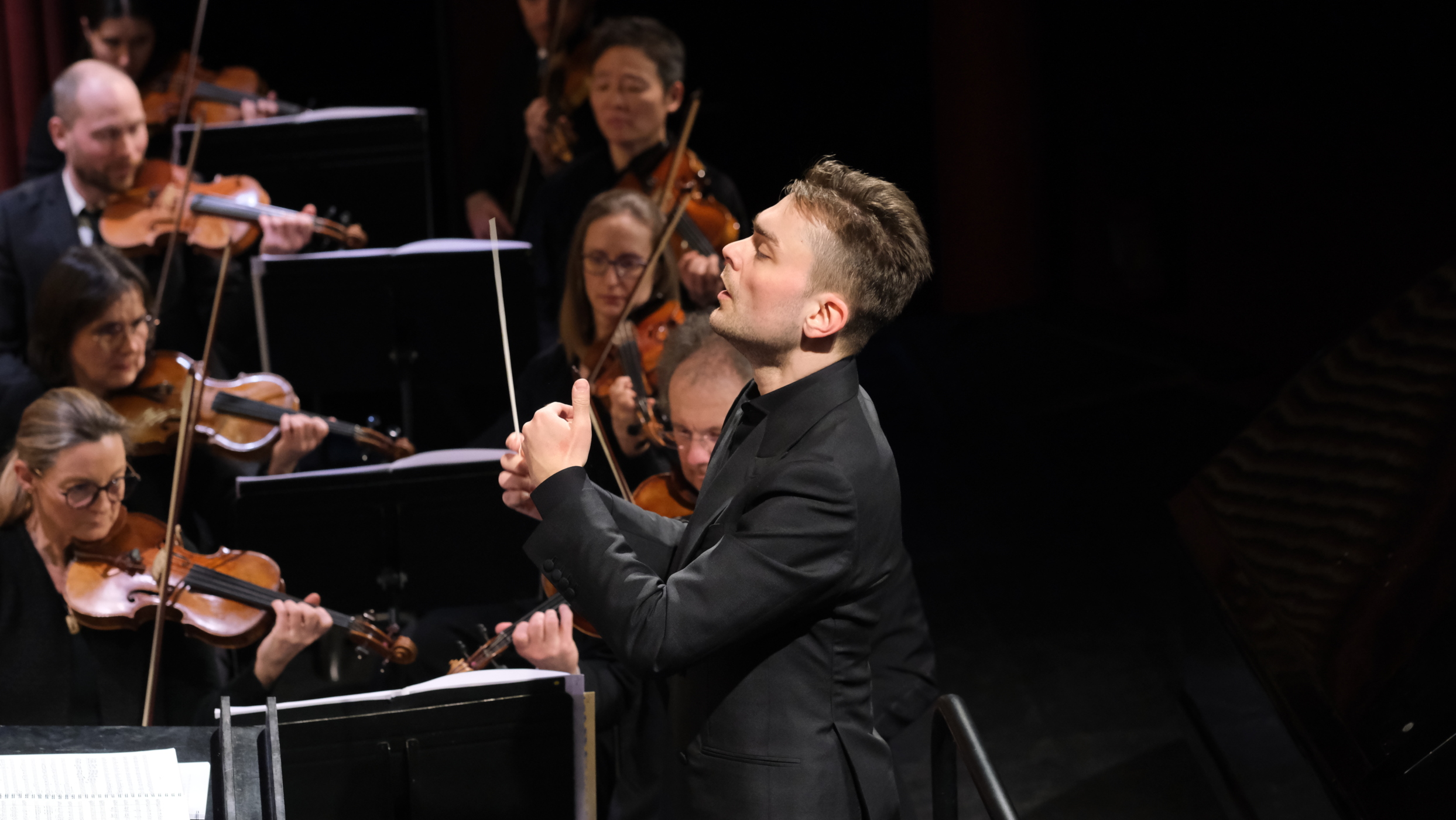
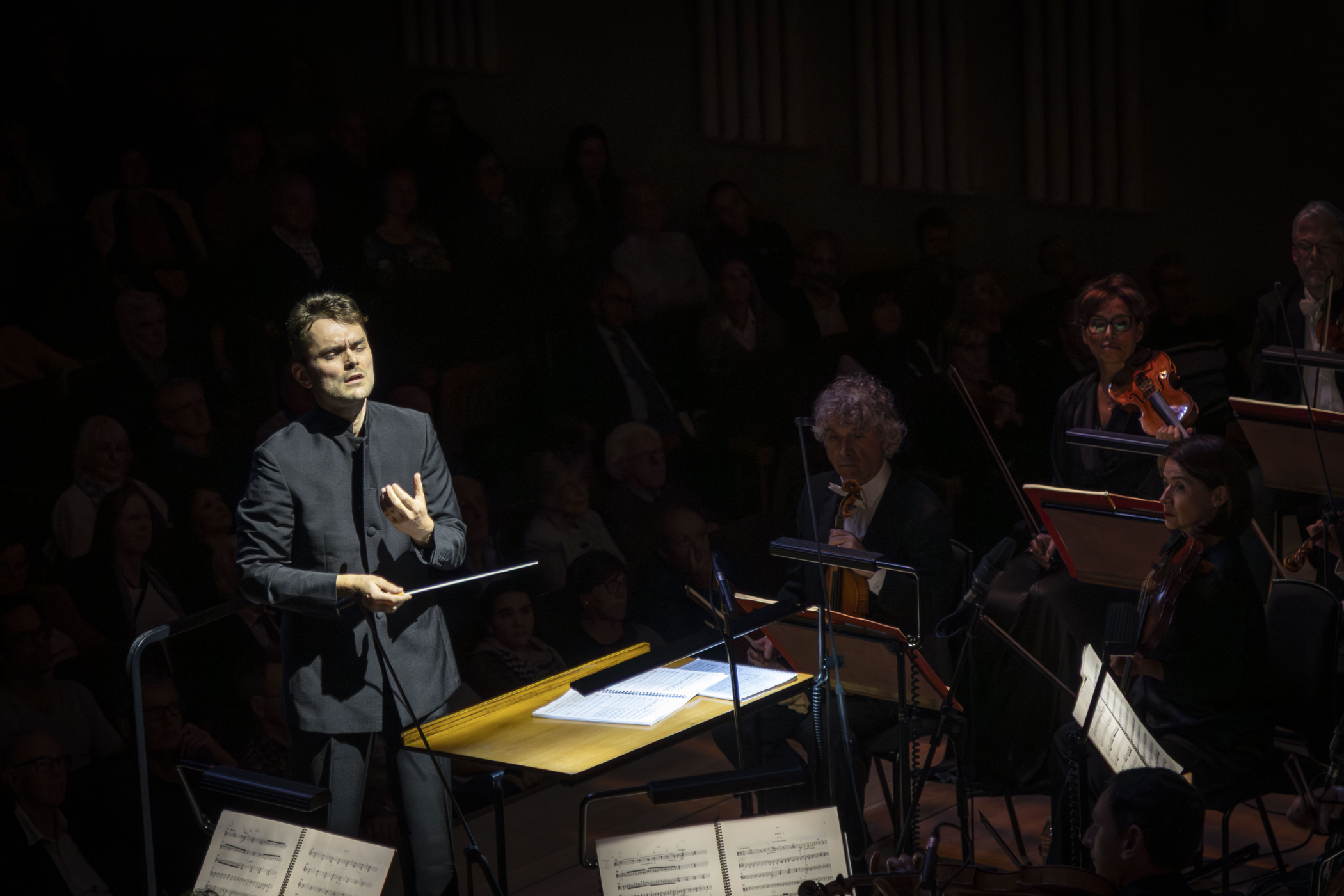
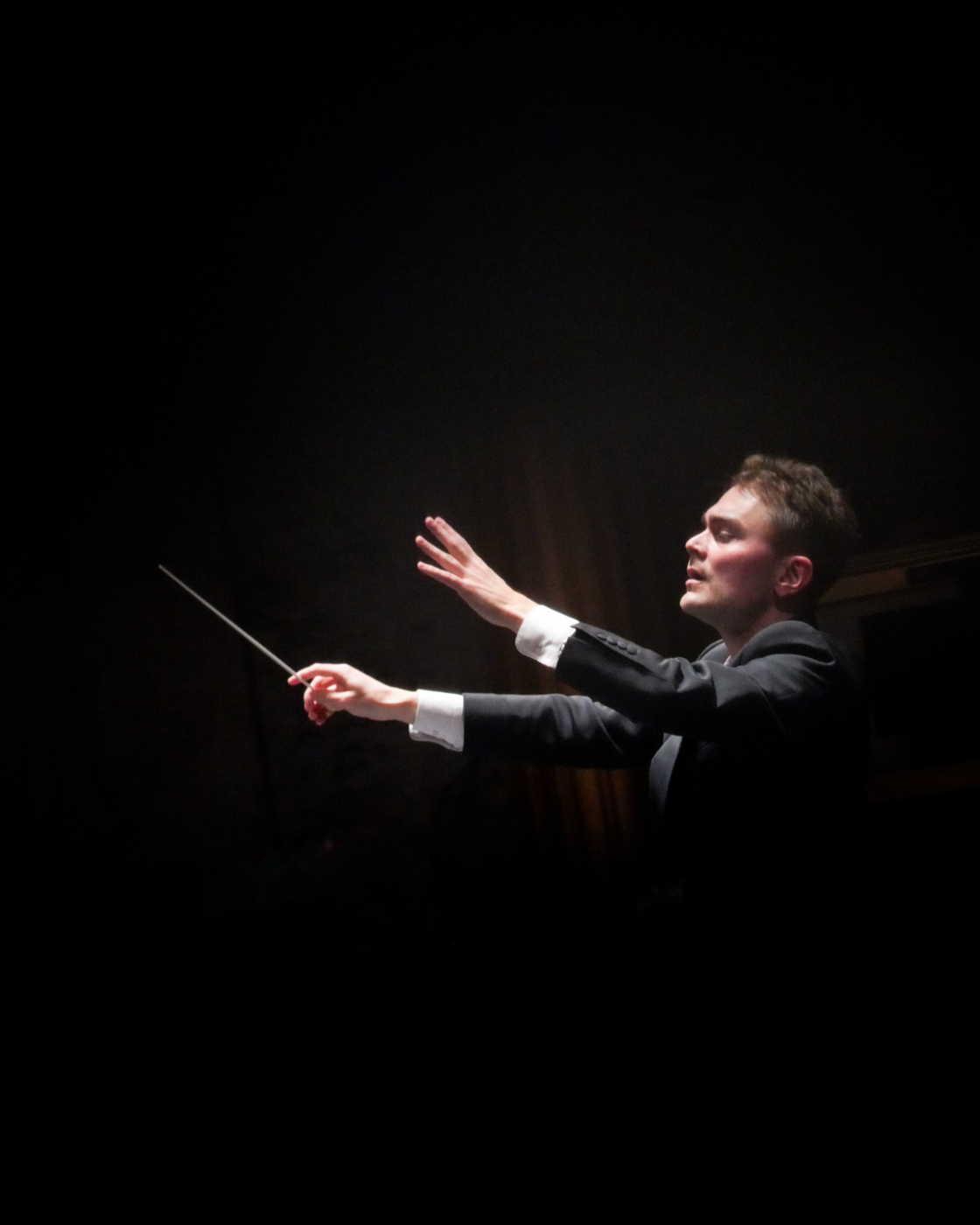
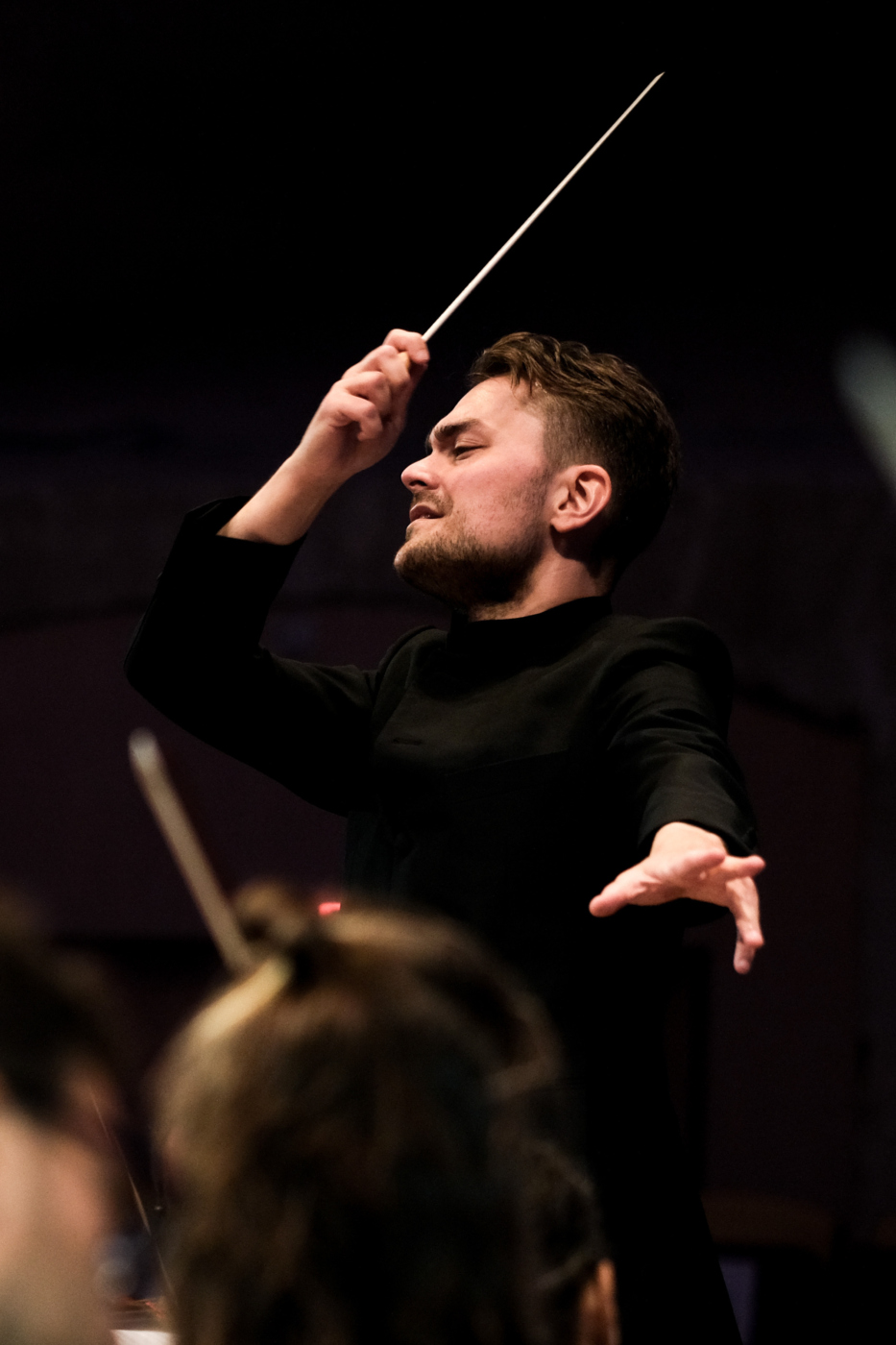
These photos are available to be downloaded.
Right click on a desired image and select the "Save Link As" option.