
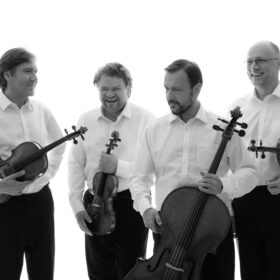
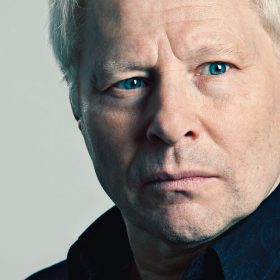
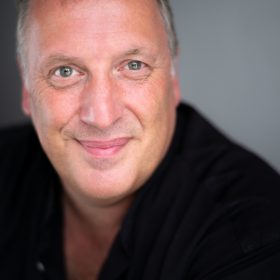
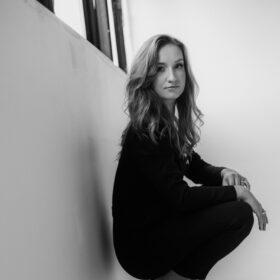


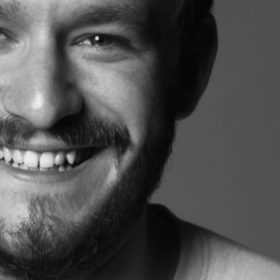
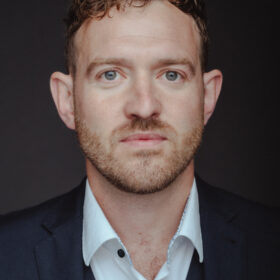


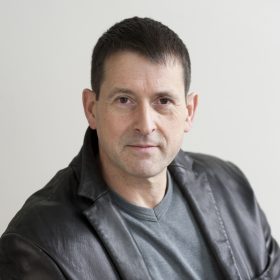
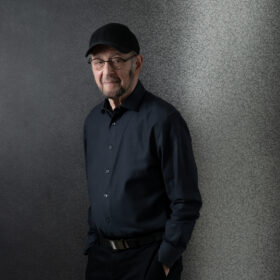
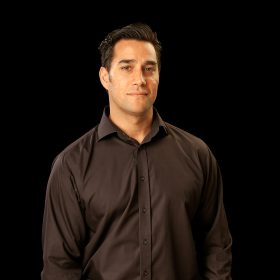
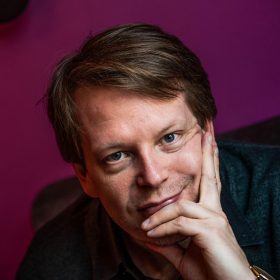
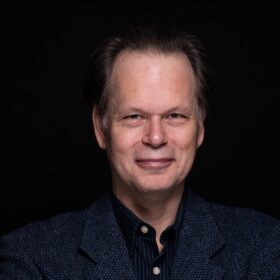

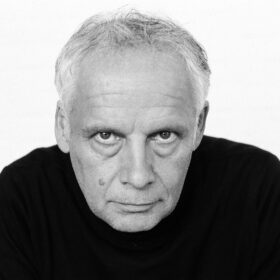
Christian Blackshaw is represented by Rayfield Allied worldwide.

Artist Manager:
.(JavaScript must be enabled to view this email address)

Assistant Artist Manager:
.(JavaScript must be enabled to view this email address)

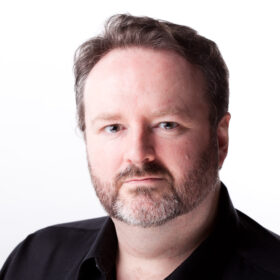
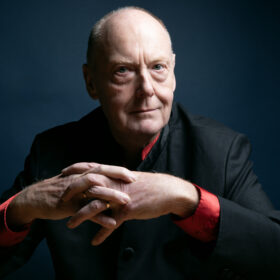
Christian Blackshaw

Piano

  • Blackshaw's playing simply defines class and classical.
    Baltimore Sun
  • Blackshaw's performance was a revelation.
    The Independent
  • ...one rarely hears every note struck cleanly and with fresh wonder.
    Financial Times
  • Now ‘firmly back in the limelight’ [Financial Times], Christian Blackshaw is recognised for the passion, range and sensitivity he brings to his extensive repertoire. His playing combines tremendous emotional depth with great understanding and, in the words of one London critic, ‘sheer musicality and humanity’.

    Following studies with Gordon Green, he was the first British pianist to study at the Leningrad Conservatoire, with Moisei Halfin. He later worked closely in London with Sir Clifford Curzon.

    He has appeared throughout the world in festivals and with leading orchestras, collaborating amongst others with Sir Simon Rattle, Yuri Temirkanov, Sir Neville Marriner, Gianandrea Noseda and Valery Gergiev. In 2009/10 he performed the complete Mozart sonata cycle in Bristol to great critical acclaim, BBC Music Magazine writing of the last as ‘one of the finest Mozart recitals I’ve heard in years’.

    In 2011 he made his remarkable Berliner Philharmoniker debut “serving every note with nobility” as one critic stated and gave a debut recital in Tokyo. Other recitals include St. John’s Smith Square, LSO St. Luke’s, Snape Maltings and the Wigmore Hall for their 110th Anniversary Season. His hugely acclaimed Wigmore Hall Mozart sonata series concluded in January 2013.

    • Schumann & Schubert, Southbank International Piano Series
      Queen Elizabeth Hall

      If there is such a thing as robust refinement, Christian Blackshaw has it in spades. There is a rigour to his playing, tempered by some of the most eloquent and inward playing I’ve heard from the current IPS roll-call of (predominantly young) pianists. Like Clifford Curzon, with whom he studied, Blackshaw has a range of touches that can produce ever-quieter layers of tone and variety of colour. Blackshaw was acutely alive to the childlike but huge significance of each piece, and after the exquisitely balanced irresolution of ‘Träumerei’ and the lingering return to the real world in ‘The poet speaks’, you were left in no doubt that this is music for grown-ups.
      Peter Reed, Classical Source
    • Mozart Series
      Wigmore Hall

      Mozart’s piano sonata in A K.331 begins with a nursery rhyme-type theme which even those immune to classical music might recognise. On it is based an elaborate set of variations that only a mind of Mozart’s creative ingenuity could sustain. The challenge facing the interpreter is to carry the music through these quasi-repetitious elaborations without letting it sound banal. It is a measure of Christian Blackshaw’s complete identification with this strand of Mozart’s genius that these Andante grazioso variations – like so much else in Blackshaw’s recital, the last of his widely toured Mozart sonata cycle – had an intensity and concentration that generated unstoppable momentum. Inherited wisdom tells us that Mozart’s 18 sonatas are either the product of an infant prodigy’s improvisatory whirls or a set of pedagogical exercises inhibited by classical form. More than half a century ago the great Lili Kraus told us otherwise. Now, in an equally sui generis bolt from the blue, Blackshaw has done something similar. While not exactly turning Mozart into a Sturm und Drang composer, he showed in Saturday’s recital that the sonatas’ intricately worked-out forms and deceptively simple melodies are suffused with temperament and feeling. On that score alone, this series represents a landmark in London’s appreciation of this music.
      Andrew Clark, Financial Times
      The last concert in the series was a reminder of just how eloquent he makes every bar seem. Part of Blackshaw’s secret was the sheer loveliness of the sound he conjured from the Steinway. It was perfectly clear, yet with a radiance around each note, like a figure caught in a beam of light. Then there was his generosity with time. Many pianists omit the repeats in Mozart’s sonatas, worried that am audience inured to 21st century hurry won’t have the patience to sit through them. Blackshaw did them all, and he also chose luxuriously slow tempi for the slow movements. It was a fond farewell to a series that’s been one of the hidden jewels of London’s musical scene.
      Ivan Hewitt, Daily Telegraph
      Mozart’s sonatas have never attained the status of Beethoven’s… But Blackshaw was consistently able to exhibit them as works of real depth as well as ingenuity. His unshowy playing was authoritative and often distinguished. Blackshaw was assiduous in observing Mozart’s repeats, allowing each work its full structural grandeur…. Blackshaw’s attention to the notes was purposeful, imaginative and occasionally magical.
      George Hall, The Guardian
    • Beethoven’s Second Piano Concerto
      Royal Scottish National Orchestra - Edinburgh and Glasgow

      Christian Blackshaw’s low-calorie, poetic and Mozartian account of Beethoven’s Second Piano Concerto.
      Michael Tumelty, Herald Scotland
      British Pianist Christian Blackshaw gave a crisp, unshowy reading, full of aristocratic elegance...a lively final Rondo that was full of mischief yet never lost its composure.
      David Kettle, The Scotsman
      The celebrated pianist Christian Blackshaw was off the scene for a number of years but he is back and gave us a positive and sensitive playing of the piano concerto Beethoven had written when only fourteen years old.
      Barnaby Miln, EdinburghGuide.com
      Some lovely interaction between soloist and orchestra.
      Seen and Heard International
    • Mozart/Schubert/Schumann
      Musashino Recital Hall

      There are great talents who have never been to Japan. He is one of them. He has launched his career in 80’s brilliantly, though, for about 20 years long he was not performing on the stage, after his partner’s death. Maybe this is one reason he hadn’t been to Japan. He is now in his 60’s and finally came to Japan to make his Japan debut. His Mozart performances in 2009/10 season and early this year have being highly praised by critics. This evening he performed Mozart, Schumann Fantasy, and Schubert D960, and this was the only performance in Japan. More eloquent when he plays in piano or pianissimo, his performing of Mozart K457 was like a great and precise universe, as if his performance clarifies how the movement of inner brain neuron is. Mr. Blackshaw draws as if the composer himself is surprised by his own composition itself. In 2nd movement he really was involved with the music. And whenever the theme comes back, he played it with full of his heart. His performance, full of mercy, was all after his long life, everything was on his every single note.
      Ongaku no Tomo
    • Mozart Recital, Wigmore Hall
      6 January 2012

      There are plenty of good concerts at any time of year in London, but by definition the exceptional happens as rarely here as in any other city. And Christian Blackshaw’s recital, the first of four he is devoting to Mozart’s 18 piano sonatas, was exceptional – both for the quality and integrity of his playing and for the amount he revealed about Mozart’s often underestimated music for solo piano. We have become so accustomed to pianists of the CD and DVD generation trying to impress with their facility and camera-friendly aura that it comes as a shock to encounter an artist of Blackshaw’s maturity and uncompromising spirit. Maybe the barometer of taste is finally swinging back in favour of experience. You can tell Blackshaw has lived with the music and its creative world for a long time. It flows from every note he plays, every joined-up phrase, every seamless cantilena – despite (or maybe because of) the surprises he springs by investing this or that motif with new meaning, by turning the music in on itself with the gentlest touch, or using a fermata to expressive effect. The luminous tone he draws from the keys is a wonder in itself, and such is the kaleidoscope of feeling he uncovers in Mozart’s apparently innocent decorative exercises that one easily takes his technique for granted, so unassumingly has he clothed it in his warm and deft musicianship. He began at the beginning, sweeping away any notion that the first two sonatas might be Mozart Lite. There was elegance, joy and improvisational whimsy in the outer movements – Blackshaw always sets the decorative in the context of the melodic – but the slow movements were the heart of the matter: the tragic, transcendental intensity of Sonata No 2 really caught the breath. His bravura despatch came to the fore in No 8, his crystalline articulation in No 17. Although the recital’s second half never quite scaled the heights of the first, it ended powerfully with a performance of No 9 that found, in Mozart’s obsessive repetitions, a musical language teetering on the brink of despair.
      Andrew Clark, Financial Times [*****]
      Horses for courses: the question of which keyboard instruments suit which composers’ music is as pertinent now as it was when the harpsichord and fortepiano were competing for dominance in the 18 century. Though Bach was a demanding connoisseur of new instruments, his music famously works on more or less anything: it dwells essentially in the mind, with considerations of timbre being secondary. But as Beethoven always wanted a bigger sound – for musical reasons as well as medical ones – he would have been delighted to get his hands on a modern Steinway, while Liszt - revelling in its luxurious colour palette - would have been over the moon. For Chopin there are pros and cons with a modern grand: his subtly calibrated art can sometimes emerge more interestingly on a Pleyel of his period. And Mozart? When Christian Blackshaw launched into Sonata No 1 K279 on his Steinway, I had doubts. The sound seemed too rich, too fat. This was partly because of the way he played it, with the utmost delicacy in the upper registers and with muscular force down below, resulting in the balance between the registers being lost. One also wanted a transparency of sound which this instrument could never provide. But one could savour the orchestral effects Blackshaw created in this opening recital of his Mozart sonata cycle, with virtual violins and cellos, flutes and bassoons in full antiphonal cry. Blackshaw sees his challenge as being to bring out the individual character of these finely constructed works; for him they are in effect mini-operas. And his playing was at times highly operatic, with the slow movements becoming quintessential arias: he created such beauty in the second sonata’s Adagio that I would gladly have listened to two repeats of the opening section, rather than one. Nobody else plays Mozart as this veteran does, because nobody else has his velvet, hair-trigger touch. He attributes this to his tutelage under the great Clifford Curzon, who induced him to make every note sing; even Blackshaw’s chords are unique, with the keys stroked, and slightly arpeggiated, to feline effect. In his hands the pared-down Adagio of the K570 sonata had the expressive resonance of a concerto solo. One could argue at times with Blackshaw’s interpretations, but this series is going to be fascinating.
      Michael Church, The Independent [****]
      Mozart's sonatas for piano are less extrovert than his concertos for it, which is probably why they are less well-known – but, in the first recital of his Wigmore Hall cycle of this particular oeuvre, Christian Blackshaw proved emphatically that the sonatas are packed with as many musical delights and as much variety. He sees these works as mini-operas, a view borne out persuasively in these enthralling performances. The lively outer movements sparkled with nimble-fingered brilliance – Blackshaw's dexterous negotiation, at high speed, of the potentially fiendish chromaticism in the first movement of K280 was particularly impressive. But it was the slow movements that brought out Blackshaw's most special qualities. He made the piano sing with a rare eloquence, conjuring poignancy and profundity from what is often, seemingly, the most unassuming music. The exquisitely liquid playing of K280’s Adagio imbued the arioso-like melody with yearning plaintiveness; and I have seldom heard a piano vocalise more soulfully than in the Andante con espressione of K311. Blackshaw's masterful touch ensured performances that were never less than beautiful, but which also mined vast depths of insight. The emotions always stemmed from the music with nothing superficially theatrical about his operatic take on it: the deeply considered mien of the first movement of K310 eschewed Sturm und Drang histrionics. From Blackshaw the minor-key episode of the slow movement was extraordinarily impassioned; while the bright, major-key interlude in the intense finale seemed uncannily like a joyous rustic folk-dance. Blackshaw's remarkable precision and fluidity ensured there was barely a note out of place (making it an especial shame that the hushed concluding notes of K310's slow movement were fudged). There was though sometimes a lack of clarity in the most rapid contrapuntal passages, especially in the lower register, the inevitable price of using a modern Steinway for repertoire that was written for the brittle tones of a fortepiano. Blackshaw's propensity to perform in a barely-lit auditorium paid great dividends: the darkness seemed to concentrate attention, the audience sitting, for the most part, in rapt silence. Modestly, Blackshaw stepped further back into the shadows to take his bows during the hearty and sustained applause. Playing of this calibre ensures that this cycle is unmissable.
      Graham Rogers, ClassicalSource.com
    • Christian Blackshaw, Berlin Philharmonic
      Berlin (November 2011)

      Blackshaw, who chose for himself an autumnal program of Mozart, Liszt, Brahms and Schumann serves every note with nobility.
      READ FULL REVIEW HERE
    • Mozart/Schubert/Schumann: Wigmore Hall, London
      (July 2011)

      Concert pianism these days is a pretty brash affair, punctuated every few months by frenzies over the latest youthful discovery. Woe betide the player who doesn't develop a marketable image, or a saleable line of chat, and whose only ambition is to be a conduit for the music. One such player is Christian Blackshaw, who laid the foundations of his art by becoming the first British pianist to enrol at the Leningrad conservatoire, and by studying under Clifford Curzon and absorbing that peerless artist's ability to make every note sing. Now in his early sixties, Blackshaw has become the unobtrusive touchstone for a kind of pianism that makes no headlines, but holds listeners enthralled. Mozart's sonatas are generally regarded - and often played - as though they were humble precursors to the much grander sonatas of Beethoven: Blackshaw gave the lie to that with a fascinating account of the late Sonata in F K 533. He brought an exuberant muscularity to the intricate counterpoint of the first movement, and an operatic expressiveness to the dreamy second movement with its startling harmonic explorations. By this time, we were ready to pay close attention to the simple rondo out of which the work had sprung, and its central cadenza came clothed in royal purple. Then he launched into the Schubert sonata that Daniel Barenboim had played on the same piano a few weeks before, and the contrast could not have been greater. Written shortly before the composer's death, the Sonata in C minor D 958 owes a superficial debt to Beethoven, but Barenboim played it as though it actually was Beethoven. Blackshaw's performance was a revelation. The shading of the echoes in the first movement was marvellously subtle, with the architecture unusually clear. Using slow and ruminative tempos, Blackshaw let the music speak with all its hints and hesitations. Schumann's Fantasy in C Opus 17, which many pianists take as a licence for flashy display, was another revelation: Blackshaw found unexpected poetry in it at every turn. There were moments when it put one in mind of Liszt, but at no point did Blackshaw betray Schumann's intensely personal voice; the wide-eyed wonder of the conclusion left a very deep silence. No encore, because anything more would have broken the spell: finally, joyful pandemonium. [5 stars]
      The Independent
      Classical propriety tussled with romantic excess in this carefully considered programme that combined Schubert’s Piano Sonata in C minor, D958 and Schumann’s Fantasy in C, Op 17 with Mozart’s composite Piano Sonata in F K533/494. The same friction was evident in Christian Blackshaw’s performance. Whether plumbing the depths of despair in the Schumann or weaving threads of pure silk in the Mozart, at no point did Blackshaw abandon his characteristic tendency towards understatement. And that was part of the appeal. For all his profound musicality, this pianist is not given to spoon-feeding his audience. There is no grand gesture in Blackshaw’s playing; no affectation; no in-your-face artifice. But there is a quiet, glowing intensity that, if you are willing to listen out for it, offers far greater rewards. Such was the case in his reading of the Mozart sonata – a well-judged antecedent to the Mozart Piano Sonata Cycle he will perform at Wigmore Hall next season. While cut-glass textures, lilting melodies and featherweight finger work were all firmly in place, the main allure of Blackshaw’s interpretation lay in the ability to say so much while betraying so little. An unexpected pianissimo; the slightest of pauses: that’s all it took to make this speak. His performance lent fresh character not only to each note but to the gaps in between. Some might have wondered whether Blackshaw’s sense of restraint would prove less of an asset with the Schubert. But the Sonata in C minor, which harnesses a sense of loneliness and alienation, is well-suited to Blackshaw’s introspective approach. His account combined the odd bittersweet indulgence with a judicious sense of pacing, particularly in the final movement where Blackshaw ramped up the tension with the main theme’s every reappearance. But the most propulsive playing came in Schumann’s highly Beethovenian Fantasy in C. Here Blackshaw matched technical athleticism with emotional agility, floating lightly into the delicate opening of the third movement after the storming conclusion to the second. The finale, on the other hand, was a marathon of controlled explosions, rendered all the more thrilling by the unseen passion shimmering beneath Blackshaw’s shy, self-possessed exterior. [4 stars]
      Financial Times
    • Mozart Sonata Cycle: St. George’s Bristol
      (September - December 2009)

      Edward Said once compared piano recitals to literary essays – the subject matter is generally canonical, technical accomplishment is expected, and it is the personal reading of a work that we, as the audience, are after. This is certainly relevant to Mozart’s piano sonatas. These pieces are not only well known but also deceptively straightforward, with a crystalline transparency that puts the soloist under much greater exposure than the more frequently performed Beethoven sonatas. Christian Blackshaw’s decision to perform all 18 works as a cycle was, therefore, a bold one. Widely celebrated as a young musician in the 1980s, Blackshaw disappeared from the radar for nearly 20 years but is now making a spirited and impressive comeback. In this, the fourth and final concert in the roughly chronological series at St George’s, Bristol, he presented four of Mozart’s late sonatas and the conclusion of what was clearly an intense emotional arc. Elegance, sensitivity and lyricism are the chief characteristics of Blackshaw’s style and, while his approach might not be to everyone’s taste, it was excellently suited to the programme. From the opening bars of the Sonata in C K309, he established a sense of drama that was sustained throughout the evening. In Sonata in A K331, the composer’s best known but least typical, Blackshaw emphasised the inherent vulnerability of the piece: his tempi were contemplative – especially in the central sections of the Menuetto – and, where other performers have attacked the famous “Alla turca” allegretto with gusto, Blackshaw chose to highlight its gentle playfulness, achieved without losing rhythmical thrust. The Sonata in F K533/K494 followed in the same vein, Blackshaw carefully spelling each phrase out to us. This is no criticism; one rarely hears every note struck cleanly and with fresh wonder. Mozart’s last Sonata in D K576 provided the fitting finale. Given that this piece was published posthumously, the temptation is to enhance it with romantic gesture but Blackshaw’s rather English reserve sought out its quiet poignancy, and shaded the heart-wrenching details of the adagio with daring pianissimo. In a world where pianists seem increasingly dependent on towering egos, Blackshaw’s understatement and shy platform manner is wonderfully refreshing. Whether these qualities would communicate as well in a really capacious venue or through rich orchestral repertoire is up for question but here, focused by an intimate atmosphere and theatrically low lighting, they shone with a unique radiance. [4 stars]
      Financial Times
      Back in Bristol, one of the finest Mozart recitals I’ve heard in years – by Christian Blackshaw...
      BBC Music Magazine
      This recital, balancing Mozart's two final sonatas with earlier works, completed Christian Blackshaw's cycle of the composer's piano sonatas at St George's. Ordering the sonatas into a satisfying cycle is in itself quite tricky, not least since Mozart wrote only one minor-key sonata (C minor, K457) and, just as in his operas, the emotional colouring of the minor mode is an important element in the overall makeup of the works. This was very much the case in the first movement of the C major sonata, K309, with which Blackshaw began his programme, where the tonic minor adds drama to the beginning of the development and, more unexpectedly but most poignantly, again in the recapitulation. It is an effect that Schubert later made his own, but Blackshaw did not exaggerate the moment in any way, content simply to let the music speak for itself. His approach to the sonata in A major, K331, was similarly understated, allowing the ever-more complex variations of the opening theme to unfold gracefully, and finally giving rein to the jangly clamour of the celebrated Alla Turca, its alternation of minor and major here taking on a greater than usual significance. Blackshaw's evident affinity for Mozart was more readily apparent in the second half. In K533/494 in F major, his singing tone was deeper and more relaxed, and the phrasing seemed to describe wider arcs. Yet here and in the last sonata, K576, in D major, the essential clarity of Blackshaw's approach allowed the composer's forays in contrapuntal writing to emerge without undue earnestness. In its turn, K576's central adagio had a clarinet-like warmth with its achingly expressive F sharp minor episode coming straight from the heart. [4 stars]
      The Guardian
      ...Christian Blackshaw's recent recital of Mozart's late piano sonatas at St George's, Bristol: this pianist may not be in the first flush of youth but I reckon he's the next big thing.
      Music OMH
  • Christian Blackshaw Concerto Repertoire

    BEETHOVEN
    • no. 1 in C major, Op. 15
    • no. 2 in B flat major, Op. 19
    • no. 3 in C minor, Op. 37
    • no. 4 in G major, Op. 58
    • no. 5 in E flat major, Op. 73 ['Emperor']
    BRAHMS
    • no. 1 in D minor, Op. 1
    • no. 2 in B flat major, Op. 83
    BRITTEN
    • Piano Concerto
    CHOPIN
    • no. 2 in F minor, Op. 21
    MENDELSSOHN
    • no. 1 in G minor, Op. 25
    LISZT
    • no. 1 in E flat major
    • no. 2 in A major
    MOZART
    • no. 9 in E flat major, K. 271
    • no. 12 in A major, K. 414
    • no. 14 in E flat major, K. 449
    • no. 15 in B flat major, K. 450
    • no. 17 in G major, K. 453
    • no. 18 in B flat major, K. 456
    • no. 19 in F major, K. 459
    • no. 20 in D minor, K. 466
    • no. 21 in C major, K. 467
    • no. 22 in E flat major, K. 482
    • no. 23 in A major, K. 488
    • no. 24 in C minor, K. 491
    • no. 25 in D major, K. 537 ['Coronation']
    • no. 27 in B flat major, K. 595
    SCHUMANN
    • A minor, Op. 54
    GRIEG
    • A minor, Op. 16
    RAVEL
    • G major

    Christian Blackshaw Chamber Music Repertoire

    BEETHOVEN
    • Quintet for piano and winds in E flat major, Op. 16
    • Complete sonatas for violin and piano
    BRAHMS
    • Piano Quartet in G minor, Op. 25
    • Piano Quintet
    BRITTEN
    • Young Apollo
    DVORAK
    • Piano Quintet
    ELGAR
    • Piano Quintet
    FRANCK
    • Piano Quintet
    MOZART
    • The two piano quartets [ G minor and E flat major]
    • Quintet for piano and winds in E flat major, K. 452
    SCHUBERT
    • The two piano trios, B flat major and E flat major
    • Quintet for piano and strings in A major ['Trout']
    SCHUMANN
    • Piano Quintet
    SHOSTAKOVITCH
    • Piano Quintet
  • Photos