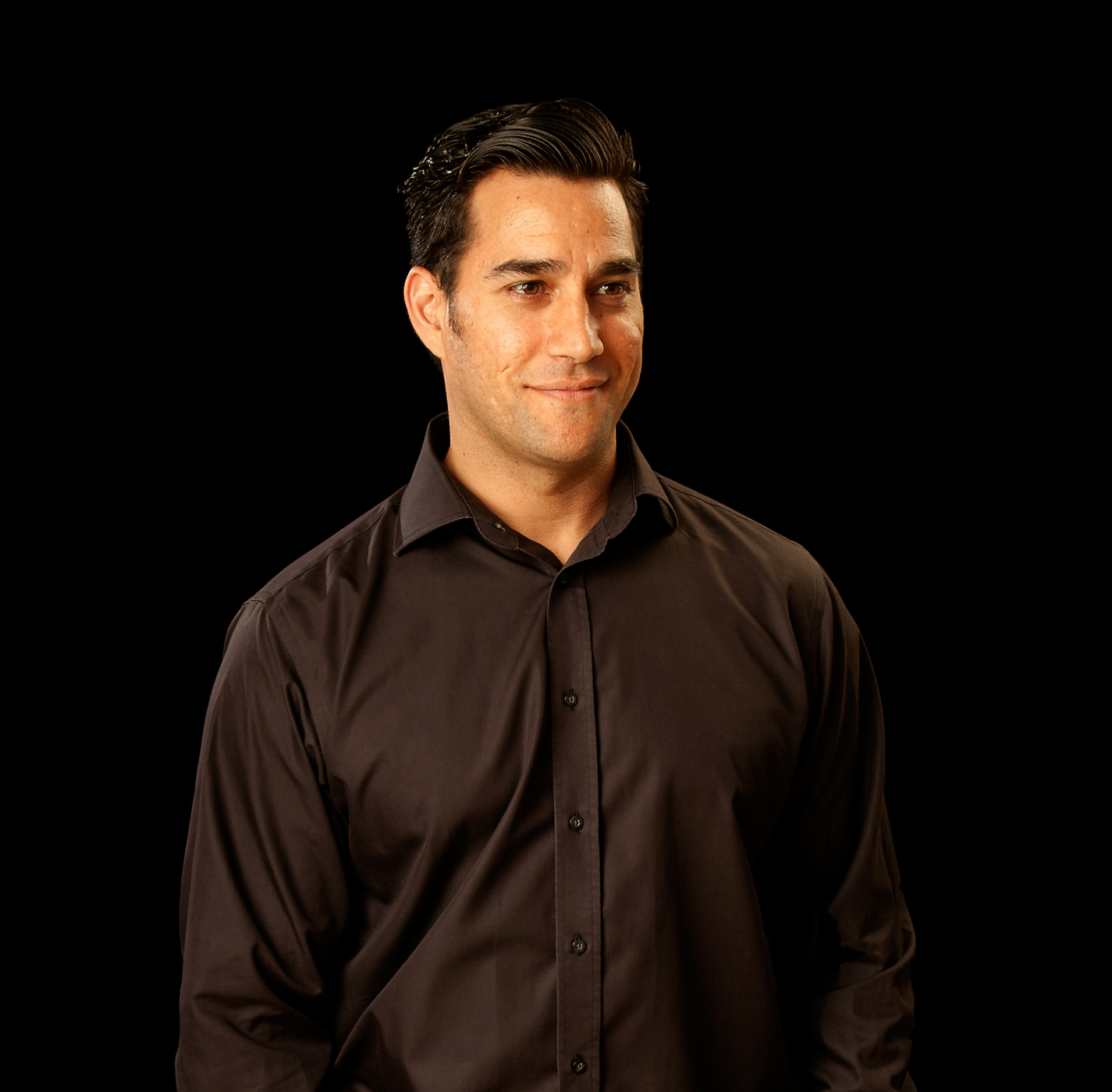
UK-based New Zealand baritone Phillip Rhodes was the winner of the 2005 New Zealand Aria Competition and was awarded second place at the International Montserrat Caballe Competition in 2008. He is a former Emerging Artist with New Zealand Opera and has since appeared regularly with the company in principal roles.
Last season he returned to New Zealand Opera in the title role of Macbeth, to Wellington Opera as Enrico Lucia di Lammermoor, and to Scottish Opera as Escamillo Carmen.
This season he looks forward to making his debut with Opera Australia as Giorgio Germont La Traviata, which he also sings at Scottish Opera, Count Anckarstrὂm Un ballo in Maschera with the Chelsea Opera Group, and further ahead to returning to the Royal Opera House, Covent Garden.
Recent highlights include Escamillo Carmen (Royal Opera House, Opera North, Welsh National Opera, The Grange Festival); his role debut as Figaro The Marriage of Figaro (Opera North); Monterone Rigoletto (Royal Opera House); his house debut at Nederlandse Reisopera as Scarpia Tosca; Father Hansel and Gretel and Ford Falstaff (Scottish Opera); Speaker The Magic Flute (Welsh National Opera); Jud Fry Oklahoma! (Grange Park Opera); and King Le Cid (Dorset Opera).
In his native New Zealand, he has recently appeared as Don Pizarro Fidelio in concert with Auckland Philharmonia; as Giorgio Germont La traviata for Wellington Opera; and as Judge Turpin Sweeney Todd, Giorgio Germont and Scarpia in a new production of Tosca for New Zealand Opera.
Other operatic engagements include Alfio Cavalleria rusticana, Silvio Pagliacci, Renato Un ballo in Maschera, Mizgir The Snowmaiden, Father Hänsel und Gretel, Marcello La bohème, Aeneas Dido and Aeneas, Roucher Andrea Chénier (Opera North); Monterone Rigoletto, Malatesta Don Pasquale, Alfio Cavalleria rusticana, Silvio Pagliacci, Marcello La bohème, Geronimo Il matrimonio segreto, title role Il signore Bruschino, the title role in a new production of Hohepa and the title role in the world premiere of Turpin (New Zealand Opera); Older Man in Tansy Davies’ Between Worlds (English National Opera); Conte di Luna Il trovatore and Scarpia Tosca (Dorset Opera); Grandfather Clock/Black Cat L’Enfant et les Sortilèges (Auckland Opera Factory); and Maori Chef/Captain Cook in Matthew Suttor and John Downie’s Trial of the Cannibal Dog (Wellington Opera House). He has also covered title role Sweeney Todd (New Zealand Opera); and Gérard Andrea Chénier, Iago Otello and Balstrode Peter Grimes (Opera North).
Rhodes was born in Hawke’s Bay, New Zealand, where he graduated in 2004 with a Diploma in Arts and Voice. In 2008, he was awarded a scholarship to attend the Cardiff International Academy of Voice under the tutelage of Dennis O'Neill, where he remained for three seasons. In 2005 he won the Lexus Song Quest, bringing him to the attention of Dame Kiri Te Kanawa, who still maintains her interest in his career. Phillip acknowledges the support of the Kiri Te Kanawa Foundation.
This biography is for information only and should not be reproduced.
La Traviata (Germont)
Opera Australia (January 2024)
As Germont senior, there was an early middle-age authority about Phillip Rhodes’ voice that made him perfect casting for the role of a 40-something father, and his delivery of the Act two air, “Di Provenza al mar,” was one of the production’s purely musical highlights.
….as Violetta had started coughing again, Germont had dropped to his knee to persuade her she’s still young and has time to find another love. Rhodes was particularly affecting
Gordon Williams, OperaWire
Phillip Rhodes impressed with his solid technique as Giorgio Germont
Zoltán Szabó, Bachtrack*****
Phillip Rhodes is impressive as the patriarch Giorgio
Irina Dunn, CityHub
As Alfredo’s father Giorgio, the humanity Phillip Rhodes brings to his attitude to Violetta is unusual and makes his demands of her more painful – because he realises what he’s asking.
Diana Simmonds, Stage Noise****1/2
Un ballo in Maschera (Count Anckarström)
Chelsea Opera Group (October 2023)
As the (rightly) jealous husband of the king’s love Amelia, Anckarström, imposing New Zealand baritone Phillip Rhodes … in the becalmed sequence of his big Act 3 aria, “Eri tu”, pulled out all the goods to moving effect.
David Nice, The Arts Desk
The lovely timbre of Phillip Rhodes’s capacious baritone paradoxically conveyed every drop of Anckarström’s bitter jealously, his voice swelling generously, the phrases sailing with Italianate elegance.
Claire Seymour, Opera Today
Carmen (Escamillo)
Scottish Opera, May 2023
Phillip Rhodes is an arresting Escamillo, with vocal bravado befitting a toreador
David Lee, The Guardian
Phillip Rhodes has the necessary arrogance as Escamillo to make the Toreador Song ring true.
Thom Dibdin, The Stage****
Phillip Rhodes was an impressive Escamillo.
David Smythe, Bachtrack****
Macbeth (title role)
New Zealand Opera, September - October 2022
Phillip Rhodes has the personality and dramatic chops to make Macbeth spring to life in a bare audition room. Tonight, he played the anti-hero as a caged tiger, pacing his palace, charting his crumbling decline in magnificent song.
William Dart, New Zealand Herald
In the title role, the formidable Phillip Rhodes hits the notes and inveigles us with his honey-gone-grainy vocal texture and sensuality. Many may remember his suave performance as Scarpia, the villainous police chief in the NZO production of Tosca. His role as Judge Turpin in Sweeney Todd also showed his ability to straddle hypnotically the line between sleaze and power. Macbeth needs all this in the Verdi opera; a flawed power-hungry man of demons and destructive machismo, and Rhodes delivers this vocally.
Michael Hooper, The Dominion Post
His brooding, troubled presence permeates everything and his eventual unravelling demonstrates a quality to his characterisation that only adds to its depth.
Malcolm Calder, New Zealand Arts Review
As Macbeth, Phillip Rhodes is in fine voice and even better acting form, his tormented madness coming into ever-sharper focus as things begin to fall apart.
Max Rashbrooke, Stuff NZ
Rhodes reveals his haunted and uncertain character through singing of wonderfully varied colours… Rhodes portrays an ambitious but conflicted character, complex, ambiguous, and ultimately weaker than his witch of a wife… he expresses Macbeth’s unhinged state with great singing and acting
Elizabeth Kerr, Five Lines NZ
Philip Rhode’s rendition of MacBeth was captivating and the switch from power hunger through despair, doubt and finally demise was a masterpiece to watch.
Alexis Brook, Ambient Light
Phillip Rhodes is the perfect embodiment of Macbeth with his bearded good looks and commanding stage presence.
Andrew Whiteside, AndrewWhiteside.com
Carmen (Escamillo)
Opera North, October 2021
King of the entertainers is Phillip Rhodes’s Elvis-like Escamillo, arriving on a bucking bronco to sing the Toreador Song with swagger.
Rebecca Franks, The Times ****
Phillip Rhodes is bold as brass as Escamillo.
George Hall, The Stage ****
Phillip Rhodes is an ostentatiously macho Toreador [...] splendid at the top — Escamillo is the trickiest role in the opera...
Hugh Canning, The Sunday Times
...it’s solidly cast: last-minute stand-in Erin Caves brings an incisive tenor to Don José, Phillip Rhodes is the testosterone-driven Escamillo – either a rodeo rider or a country and western singer, perhaps both – and Camila Titinger’s soft-toned Micaëla has power where it counts.
Erica Jeal, The Guardian ****
Of the four principals only Phillip Rhodes’ Escamillo – rising above having to do the Toreador’s Song as Elvis – consistently satisfies with his smooth singing and a swagger that never goes too far...
Ron Simpson, The Reviews Hub
Phillip Rhodes’s powerful Escamillo...
Geoffrey Mogridge, Ilkley Gazette
Falstaff (Ford)
Scottish Opera, July 2021
Phillip Rhodes impresses as the energetically suspicious husband Ford and his deceptive alter-ego, Mr Brook.
Mark Brown, The Telegraph
Phillip Rhodes, as the outraged husband Ford and his disguised alter-ego Mr Brook, captures, in song and gesture, the power and energetic humour of his character’s misguided suspicion.
Mark Brown, The National
Phillip Rhodes sings Ford with unusual lyricism and warmth, almost enough to make this rotter sympathetic.
Simon Thompson, The Times ****
Phillip Rhodes [was] an outraged Ford, delightfully scheming as Mr Brook
David Smythe, Bachtrack ****
…Phillip Rhodes (Ford), Elgan Llŷr Thomas (Fenton), Aled Hall (Dr Caius) and Jamie MacDougall (Bardolph) all played their part in this happy mosaic.
Andrew Clark, Opera Magazine
Fidelio (Don Pizarro)
Auckland Philharmonia Orchestra, May 2021
The rest of the cast acquitted themselves well. The best of them was Phillip Rhodes as the malevolent Pizarro, with a beautiful round baritone that he used to sail through the extremes of his vengeance aria without strain, yet still giving the character’s baleful personality its due.
Simon Holden, Bachtrack
Hansel and Gretel (Father)
Scottish Opera, February 2021
[Nadine Benjamin] is matched with a beautifully sung father in Phillip Rhodes. Both here make their company debuts, and I hope we see them both again soon
Simon Thompson, Bachtrack, 10 February 2021
The singing is top class too, with company debuts for Phillip Rhodes, who brings vocal power and real charm to The Father
Keith Bruce, VoxCarnyx, 10 February 2021
Phillip Rhodes’s (beautifully sung) Father
Neil Fisher, The Times, 9 February 2021
The baritone Phillip Rhodes’s Father encapsulates the humour of David Pountney’s English translation of the libretto
Mark Brown, The Telegraph, 5 February 2021
Phillip Rhodes's well-produced baritone made a lusty impression as the Father…
Opera Magazine, April 2021
The Marriage of Figaro (Figaro)
Opera North, February 2020
The New Zealand baritone Phillip Rhodes relaxed into the title role immediately, despite taking it on for the first time. It fitted him like a glove. His Figaro retained unclouded optimism in the face of every setback, helped by warm, clear tone and eyebrows that crinkled with mirth at every excuse.
Opera Magazine, Martin Dreyer
Rhodes’s considerable acting skills and dark voice were just right for the part.
Bachtrack, Richard Wilcocks****
Phillip Rhodes was an outstanding Figaro: he has an impressive roster of roles to his name, and his flexible, finely coloured baritone blended beautifully with Fflur Wyn’s mercurial Susanne. Much thought had been given to their duets … their vocal intertwining was sublime.
MusicOMH, Melanie Eskenazi****
This cast is led by Rhodes and Wyn who have put on an excellent performance.
The Reviews Hub, Dawn Smallwood
Performances by the main cast are faultless. Phillip Rhodes gives a muscular performance as Figaro.
Manchester Evening News, Yakub Querishi
Carmen (Escamillo)
Welsh National Opera, September 2019
...Phillip Rhodes's Escamillo balanced bravado with charm.
Opera Magazine, Rian Evans, November 2019
These photos are available to be downloaded.
Right click on a desired image and select the "Save Link As" option.