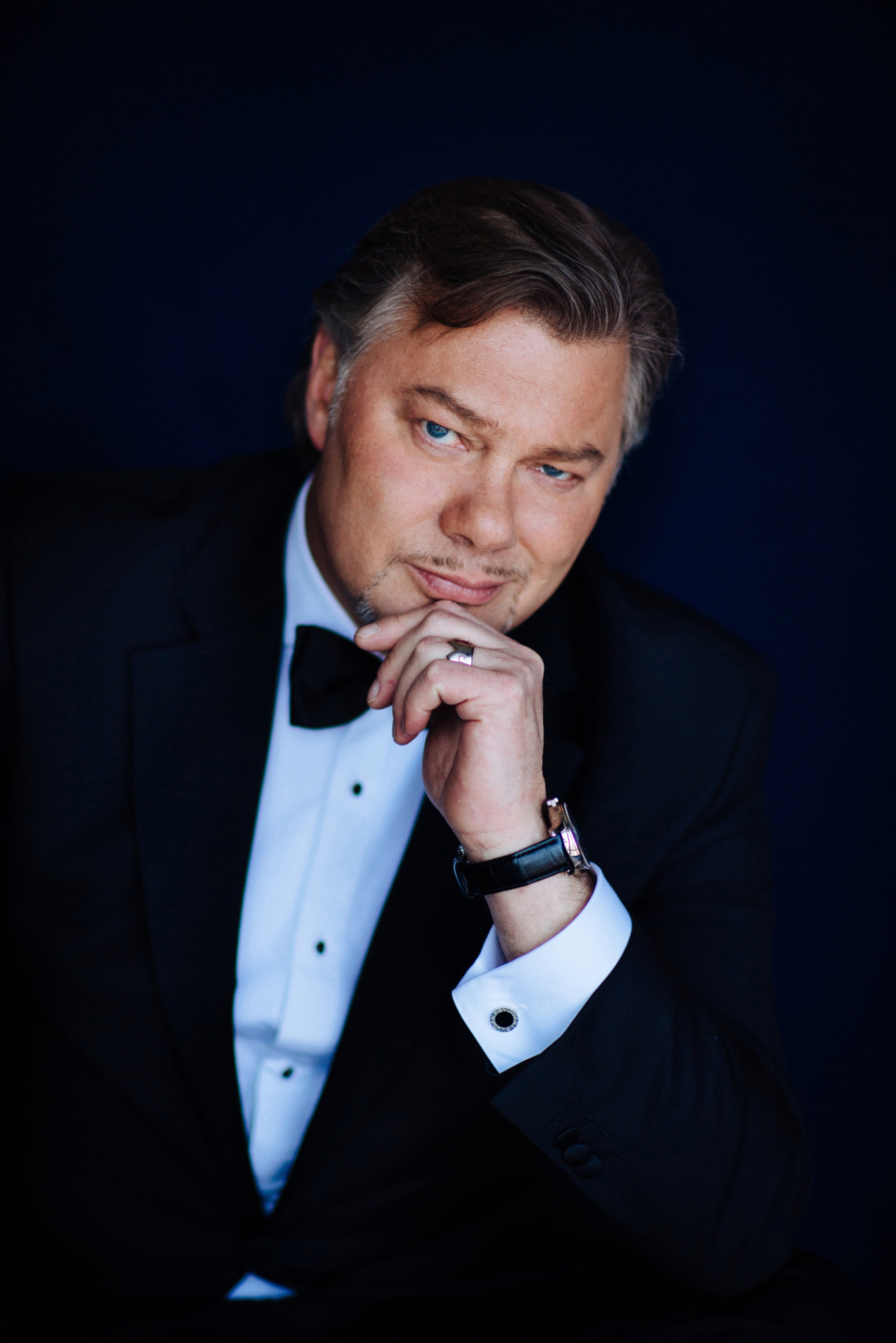
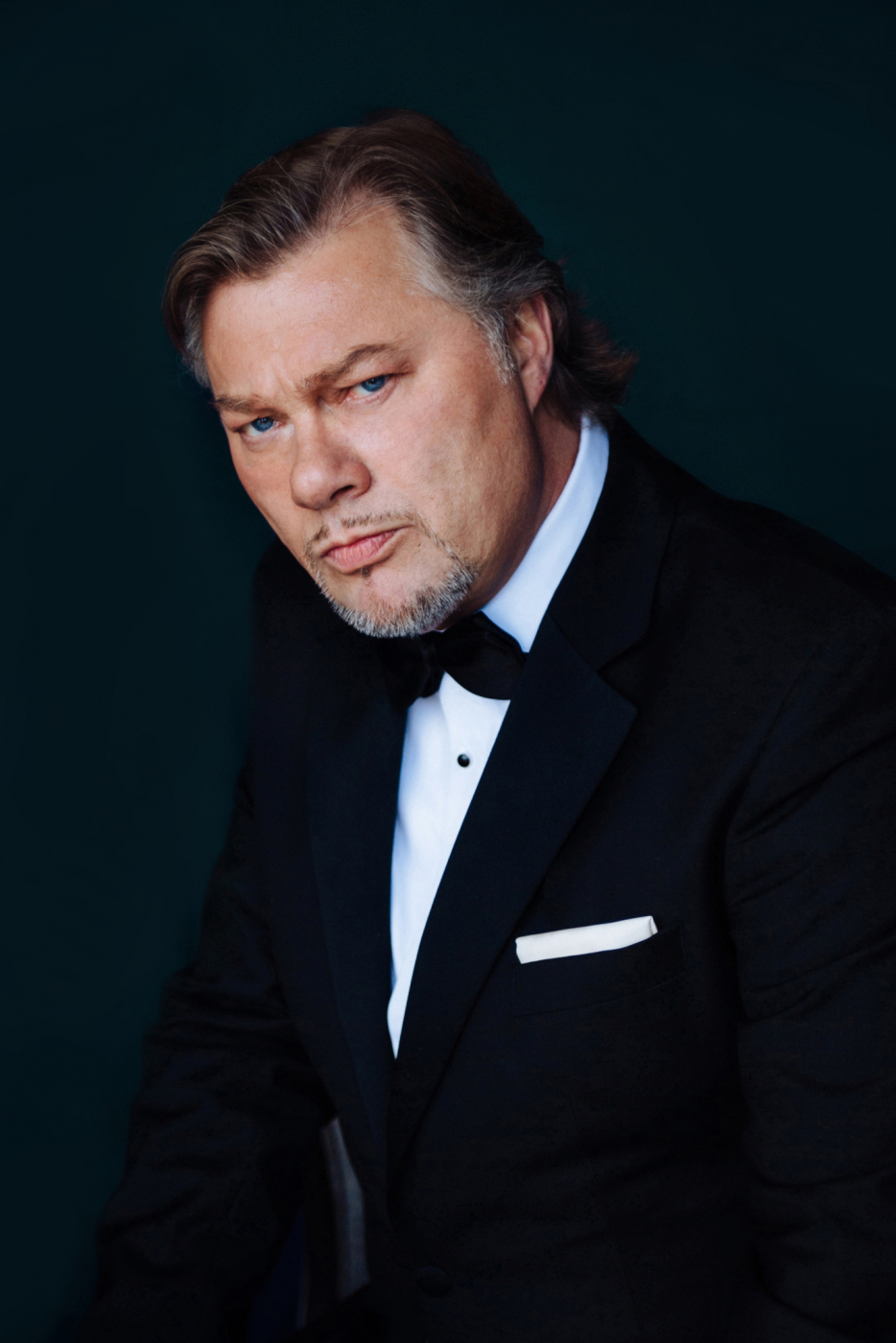
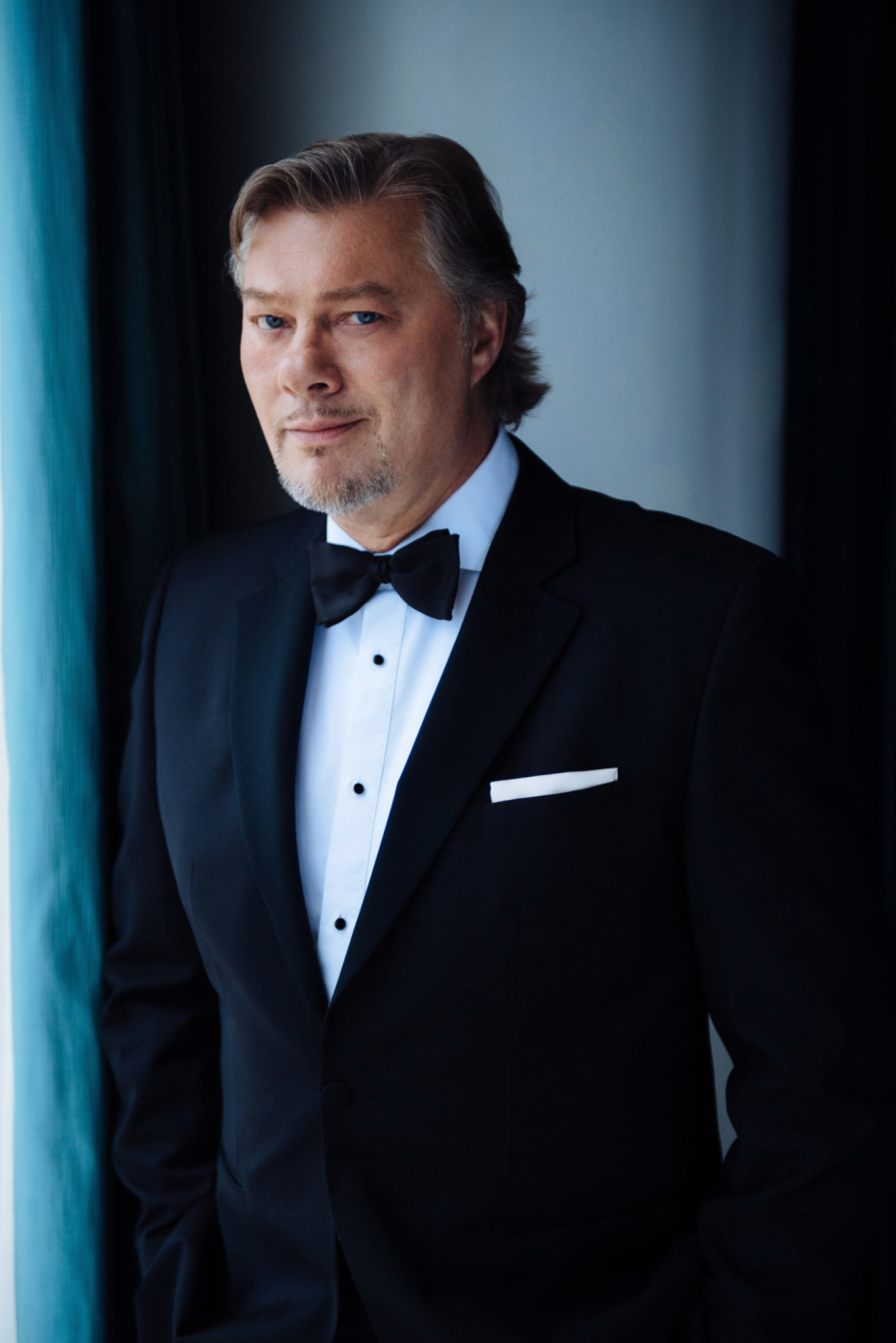
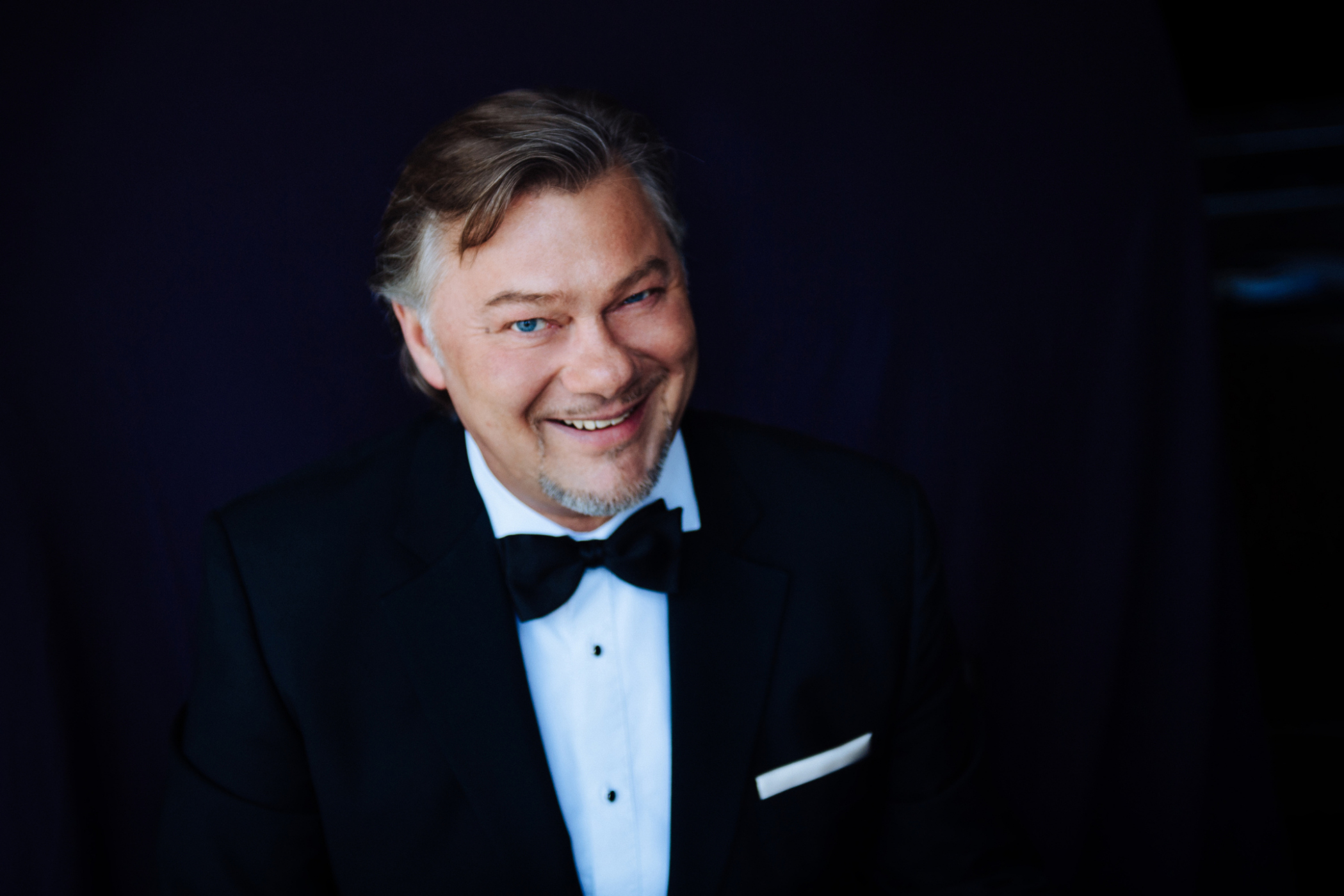
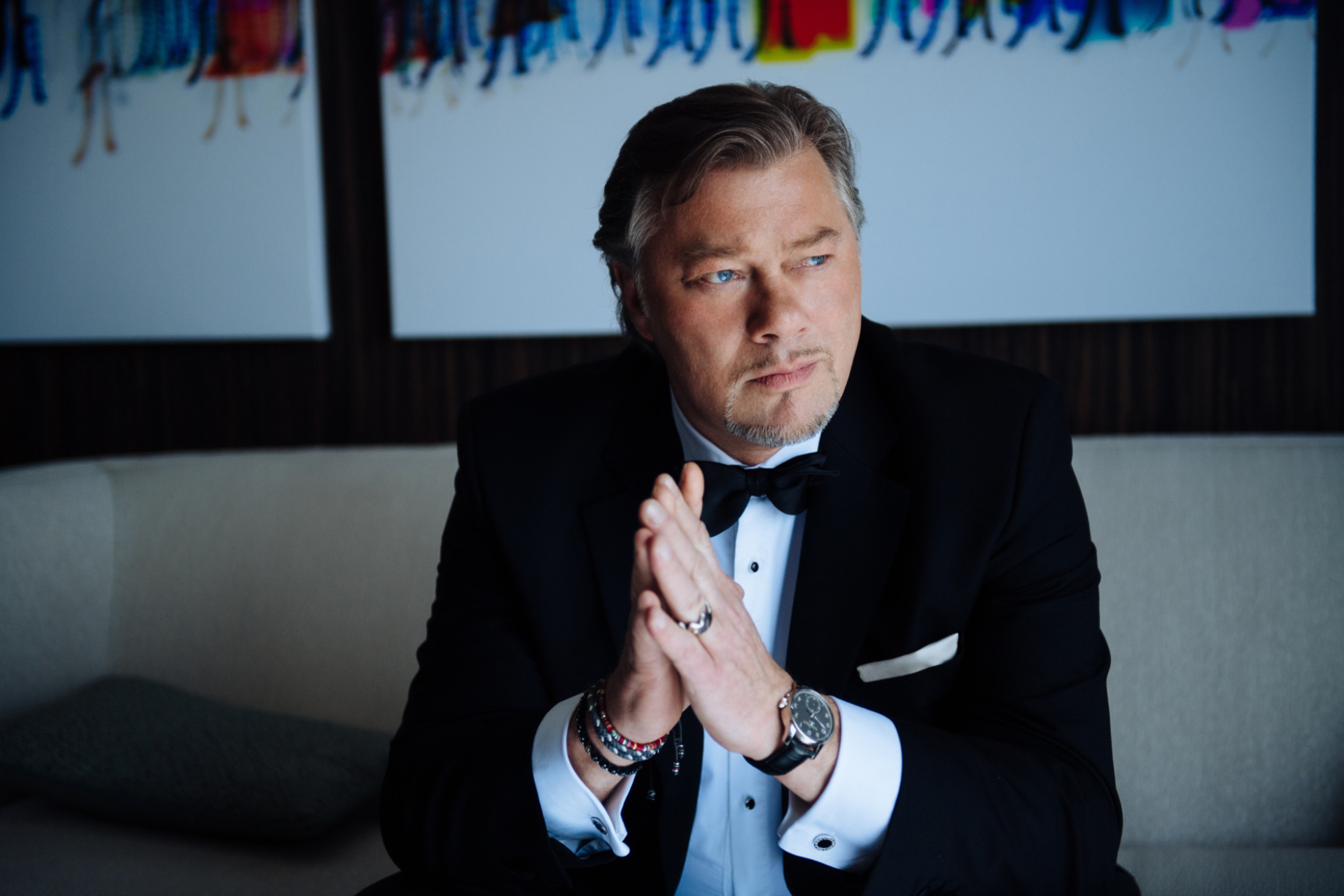
René Pape, one of the world’s leading basses, received his musical education in his native city of Dresden. He made his debut while still a student in 1988 at the Berlin State Opera and has been a member of this company ever since. There, he has performed the major roles of his repertoire, such as Rocco, König Marke, König Heinrich, Pogner, Fasolt, Hunding, Sarastro, Figaro, Leporello, Don Giovanni, Philipp II, Gurnemanz and Boris Godunov.
Internationally, he has appeared at all the major opera houses in Europe, North America and Japan including San Francisco Opera, Bayreuth, Glyndebourne, Royal Opera House Covent Garden, Lucerne, Munich Opera, Orange, St. Petersburg’s “White Nights Festival” as well as the Salzburg and Verbier Festivals, touring regularly with the Metropolitan New York and Berlin State Operas. Since his successful debut, he has been a welcome regular guest artist of Metropolitan Opera. There, under James Levine he has appeared in new productions of Tristan und Isolde König Marke, Fidelio Rocco, Don Giovanni Leporello and Faust Mephisto, as well as in revivals of Lohengrin König Heinrich and Die Meistersinger Pogner. It was also in New York that he sang his first Gurnemanz under Valery Gergiev. At the Lyric Opera of Chicago he has performed the roles of Pogner under Christian Thielemann, König Marke Tristan und Isolde under Semyon Bychkov, and Rocco under Christoph von Dohnanyi.
Equally at home on the concert platform, René Pape has appeared in all major international concert halls: in Tokyo, Madrid, London, Florence, New York, Chicago, Paris, Philadelphia and Boston. He has made numerous TV appearances, including a TV-portrait for ARTE, CD and DVD recordings on the BMG, EMI, DGG, TELDEC labels, as well as performing the roles of Sarastro and Sprecher in Kenneth Branagh’s film production of The Magic Flute.
This biography is for information only and should not be reproduced.
Rocco, Fidelio
The Metropolitan Opera (Winter 2025)
“Singing in firm voice, René Pape, the Rocco when the production was new, ensured that the maturity accrued with the intervening years contributed to an affecting portrayal of a man troubled by injustices and motivated, however modestly, to mitigate them.”
George Loomis, Opera Magazine
Heinrich der Vogler, Lohengrin
Staatsoper Berlin (December 2020)
René Pape was his usual magnificent self as the King
Opera Magazine, April 2021
Jacopo Fiesco, Simon Boccanegra (DVD recording)
Salzburg Festival (August 2019)
René Pape imbues Fiesco with characterful dignity and is on good vocal form
Opera Magazine, May 2021
Beethoven, Dvořák, Quilter & Mussorgsky
Edinburgh International Festival (August 2017)
A singer of exceptional intensity and focus, a figure who communicated with disarming directness and sincerity… this was an exceptional recital, perceptive and entirely persuasive.
David Kettle, The Scotsman *****
Pape is certainly implacable, with scarcely a smile, even when his audience cheered and shouted for more. All is at the service of the music. No movement is wasted. The fiery furnace is within him.
Fiona Maddocks, The Observer ****
Beethoven 9 with Daniel Barenboim
BBC Proms 2012
The four soloists were led into their battle by the clarion tones of René Pape, a bass whose vocal depth and presence anchored some of the most challenging ensemble writing in the repertoire.
Guy Dammann, The Guardian [5 *****]
The soloists, particularly bass René Pape, were full of fire and conviction.
Ivan Hewitt, The Telegraph [4 ****]
Gurnemanz, Parsifal
Royal Opera House (November 2013)
Vocally the standard is set by René Pape's immaculate, intense Gurnemanz, who makes every syllable in his narrations matter.
Andrew Clements, The Guardian ****
Vocally the stars are René Pape whose Gurnemanz is easy, conversational but cavernously strong, and Gerald Finley as Amfortas.
Michael White, The New York Times
René Pape’s Gurnemanz is magnificently sung: nobly authoritative, but never pompous or barking.
Rupert Christiansen, The Telegraph ****
René Pape brings crisp, conversational tone to Gurnemanz’s monologues.
Andrew Clark, Financial Times *****
That this is still a triumphant evening is thanks... to the burnished beauty of Pape’s singing.
Michael Church, The Independent
Faust: Royal Opera House
(September/October 2011)
Also new is the Mephistopheles, leading German bass Rene Pape, who is too rarely in London. Hearing his majestic voice in a major role here is a great pleasure…
Financial Times
Pape’s Mephistopheles always offered good value – and eloquent eyebrows, too. This Devil snared his catches through mischievous underplaying.
The Times
And the devil himself? From the moment René Pape appears, waving sulphurous smoke away from his face, his is an enticingly nonchalant malevolence, booming bass authority offset by melting head tones and many a vocal shrug.
The Independent
Recital Debut: 19th Century German Lieder [Brian Zeger - Piano]: Carnegie Hall
(April 2009)
By its nature the bass voice is better suited for melancholy music than for cheerful, celebratory works. You can find exceptions — the bass part in the Beethoven Ninth Symphony and Leporello’s Catalogue Aria from “Don Giovanni,” for example — but a sepulchral growl, room-shaking power and a dark, soulful coloration are the truest hallmarks of a great bass, and composers are drawn to those qualities for the naturalness with which they evoke desolation, melancholia and terror.
René Pape sang a program of 19th-century German lieder at Carnegie Hall on Saturday, his New York recital debut.
René Pape has inhabited both the brighter and gloomier ends of the bass repertory on the opera stage and in orchestral performances, and although his appearance at Carnegie Hall on Saturday evening was his New York recital debut, he has also been heard here in the song repertory. He was one of four Metropolitan Opera singers who collaborated with James Levine on an evening of Schubert songs on this same stage in 2004. That night, not surprisingly, he sang the most heart-wrenching works on the program.
In a way that performance was a preview of his recital on Saturday. Except for his final encore — “Some Enchanted Evening” — he sang only 19th-century German lieder of the most brooding sort, with Schubert groups surrounding Wolf’s “Drei Gedichte von Michelangelo” on the first half, and Schumann’s “Dichterliebe” after the intermission.
“Aufenthalt,” which opened the first Schubert group, offered a quick reminder of the depth and power of Mr. Pape’s sound, as well as the subtlety of his interpretive style. He is not a singer who dazzles with agile changes of timbre within a song, and for the most part he chose songs that barely require that.
But his singing is hardly monochromatic. If “Standchen” lacked the lilt a higher voice gives it, the balance of drama and gentleness that Mr. Pape brought to it made it seem fresh. And the dynamic fluidity that both Mr. Pape and his eloquent pianist, Brian Zeger, lavished on “Der Atlas” pointed up the anguish that drives the song, much as a similar marshalling of resources unleashed the anger that propels “Prometheus,” in Mr. Pape’s second Schubert group.
For pure, soul-wrenching introspection, nothing on the program — not even “Dichterliebe” — quite matched Mr. Pape’s rendering of the Wolf “Michelangelo” songs, particularly the central meditation on mortality, “Alles endet, was entstehet.”
“Dichterliebe” grapples with a more transitory kind of pain, even if the Heine poetry that Schumann set paints the vicissitudes of love in the grandest terms. Here too it was the fine gradation that Mr. Pape and Mr. Zeger applied to the music that gave Heine’s (and Schumann’s) passion flesh and blood. Mr. Pape’s sound was often at its lightest, but in songs like “Am leuchtenden Sommermorgen” and “Ich hab’ im Traum geweinet,” that gentleness had an irresistible power.
New York Times
Tristan und Isolde: Glyndebourne Festival Opera
(August 2007)
The greatest performance is René Pape's King Mark, who sounds the lowest depths of grief at his betrayal by his wife and his beloved nephew.
The Independent
With Rene Pape repeating his magisterial King Marke...this is opera as good as it gets.
The Guardian
...bass René Pape as King Marke goes a long way...generosity incarnate, a great performance.
The Independent
Boris Godunov: Metropolitan Opera
(October 2010 / March 2011)
...the exciting cast the Met had assembled, headed by the great German bass René Pape in the title role...
We first meet Mr. Pape’s Boris at the czar’s coronation. With his towering physique and unforced charisma, Mr. Pape looks regal and imposing. Yet with his vacant stare, the haggard intensity in his face, his stringy long hair and his hulking gait, he is already bent over with guilt and doubt. Mr. Pape has vocal charisma as well, and his dark, penetrating voice is ideal for the role...his enunciation was crisp and natural. And in every language, Mr. Pape makes words matter.
During the coronation there is a soul-searching moment when Boris removes his crown and voices his remorse to himself. Some great Borises have conveyed the character as beset with internalized torment. Mr. Pape’s anguish is always raw, fitful and on the surface. But the volatility is balanced by the magisterial power he conveys.
Mr. Pape is riveting in Boris’s death scene, where, seemingly through sheer, body-crunching guilt, the czar has a physical breakdown and dies.
The strong cast members...were all cheered, especially Mr. Pape.
New York Times
Many basses make Boris bigger than life; René Pape makes him life-size, also poignant and splendidly sonorous.
Financial Times
René Pape is superb as a wrenching, troubled Boris.
The Opera Critic
As for Pape, there is hardly another singer alive with his power to make the scene around him look sharper and sound more intense… Pape wraps his ermine voice so tightly around the character’s psyche that singer and sovereign fuse. Boris is a Lear-like figure, intertwining majesty, age, and doubt, and Pape savors his complexities. Mussorgsky translated the irregular rhythms and veering inflections of speech into short, mercurial phrases, and Pape, instead of bellowing and rasping his way toward his death, delivers Boris’s agonies with restrained grace, illuminating his magnetism and fragility.
New York Magazine
These photos are available to be downloaded.
Right click on a desired image and select the "Save Link As" option.